
 +86-0755-86131192
 2025-02-14
As a common foot orthotic device, corrective insoles play an important role in improving foot biomechanical function, adjusting gait and preventing lower limb diseases.
Its basic principle is to optimize the force distribution of the sole through scientifically designed support structures and shock-absorbing materials, so that the pressure in various areas of the foot is more balanced during walking or standing.
Specifically, corrective insoles can help maintain the normal height and curvature of the arch, adjust the pressure concentration caused by abnormal foot shapes such as flat feet or high arches, thereby relieving pain in the sole, reducing fatigue, and effectively preventing soft tissue and joint injuries caused by uneven force.
In addition, by improving the inversion and varus angle of the foot, corrective insoles can also improve gait stability, reduce the load on the knee and hip joints, and provide effective support for sports rehabilitation and daily activities.
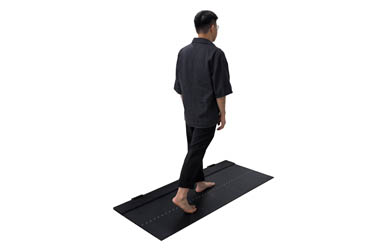
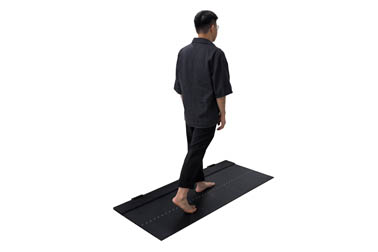
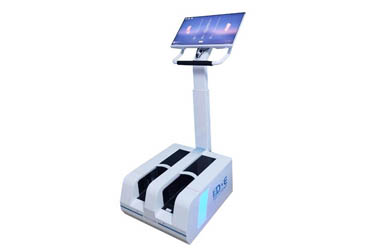
In the design and application of corrective insoles, foot scanners play a vital auxiliary role.
Foot scanners use three-dimensional imaging technology and high-precision sensors to quickly and accurately collect key data such as the shape contour and arch height of individual feet.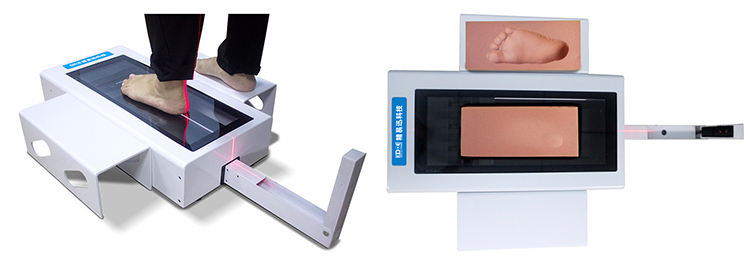
With these detailed data, doctors and orthopedic experts can comprehensively evaluate the patient's foot structure, identify potential deformities or uneven force, and develop personalized correction plans accordingly.
Personalized corrective insoles can fit the patient's foot shape more accurately, ensuring the best support and cushioning effect, thereby achieving significant results in improving gait and preventing foot diseases.
In addition, foot scanners are also important in evaluating the effect of corrective insoles before and after use.
Through periodic testing, the scanner can quantitatively record the changes in the patient's foot structure and force state, and intuitively show the actual effect of corrective insoles on the arch shape, gait symmetry, etc.
These data not only provide a basis for doctors to adjust the correction plan, but also help to monitor the patient's rehabilitation process in the long term to ensure the continued effectiveness of treatment measures.
The three-dimensional model generated by the scanner is convenient for data archiving and comparison, providing a valuable reference for the design and optimization of subsequent orthopedic devices
 Back to list


 +86-0755-86131192