
 +86-0755-86131192
 2025-03-25
Application principle and usage scenarios of plantar pressure distribution test system
I. Application principle
Pressure sensing technology
Through the laying of high-precision pressure sensor arrays (thousands of sensors), the pressure changes in various areas of the sole of the foot are captured in real time, and the data is converted into electrical signals and transmitted to the computer system.
The sensor is based on the principle of piezoresistance or capacitance, and quantifies the plantar pressure distribution by measuring the impedance or capacitance changes in the force-bearing area.
Dynamic data acquisition and processing
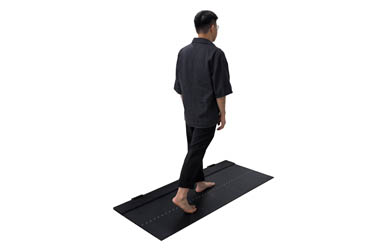
In dynamic mode, the system continuously records the pressure changes in the gait cycle when the subject walks and runs, and generates a dynamic pressure map (such as pressure heat map, trajectory deviation curve).
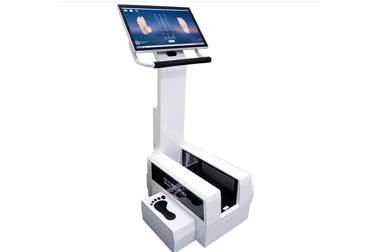
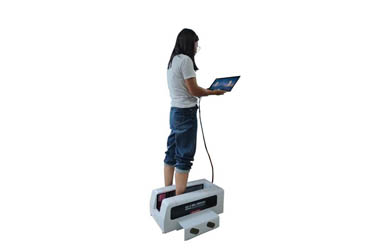
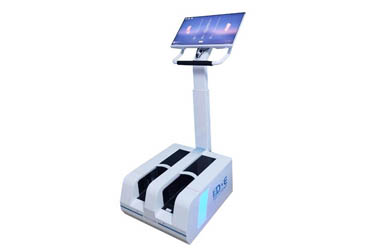
In static mode, the center of gravity distribution, symmetry and arch morphology of the foot are analyzed through standing tests to generate a three-dimensional pressure model.
Biomechanical analysis and visualization
Combining gait cycle parameters (such as foot angle, step length) and mechanical indicators (such as peak pressure, load curve), the software algorithm automatically identifies abnormal pressure areas (such as metatarsal high pressure area, arch collapse).
The results are presented intuitively in the form of heat maps, three-dimensional models, etc., to support clinical or scientific researchers to quickly interpret them.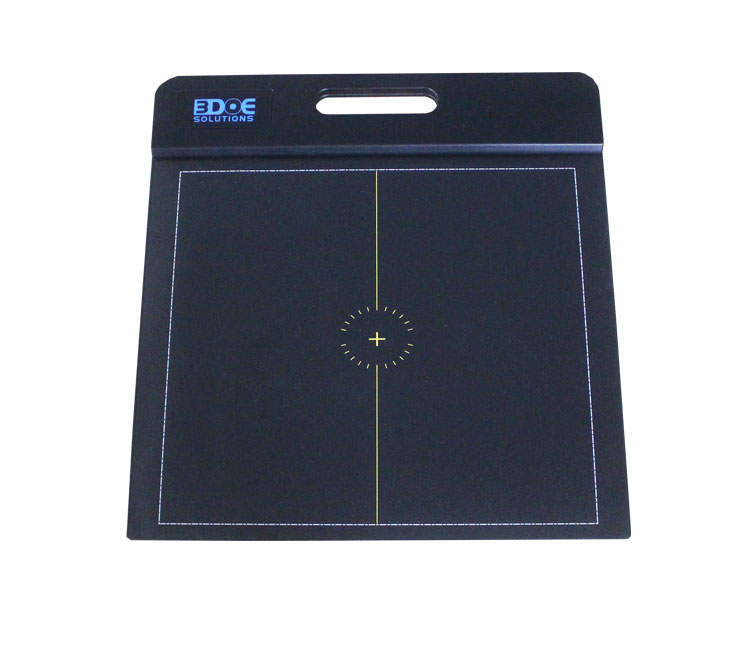
2. Usage scenarios
1. Medical diagnosis and disease management
Foot deformity screening: quantify structural abnormalities such as flat feet, high arches, and inversion and valgus, and evaluate the degree of arch collapse and pressure imbalance areas.
Prevention of diabetic foot: identify high-pressure areas and ulcer risk points on the sole of the foot, and guide customized orthotics to disperse pressure.
Chronic pain tracing: analyze the plantar pressure distribution of patients with knee pain and low back pain, and associate the biomechanical imbalance of the lower limbs.
2. Sports science optimization
Sports injury prevention: detect the peak distribution of plantar pressure during running, jumping and other actions, and adjust the training plan to reduce the risk of metatarsalgia and Achilles tendonitis.
Sports equipment adaptation: optimize the cushioning structure of sports shoes or customize insoles based on pressure data to improve arch support and comfort.
3. Rehabilitation medicine assessment
Gait abnormality correction: Dynamically track the changes in gait cycle pressure of stroke and fracture patients, and formulate personalized rehabilitation plans.
Balance function training: Through open/closed eyes standing test, quantify the center of gravity swing amplitude and evaluate neuromuscular control ability.
4. Public health and scientific research
Group health screening: Large-scale detection of adolescent foot development abnormalities (such as flat feet) or foot fatigue risks of long-term standing people.
Biomechanical research: Explore the association mechanism between plantar pressure and systemic diseases (such as scoliosis and arthritis), and improve clinical diagnosis and treatment models.
III. Technical features and advantages
High-precision dynamic capture: Support millisecond-level data acquisition, accurately reflect the instantaneous pressure changes in the gait cycle.
Multi-scenario adaptability: Compatible with multiple modes such as static standing, dynamic walking, balance test, etc.
Non-invasive quantitative evaluation: Avoid the subjectivity of traditional X-rays or palpation, and provide objective data support for diagnosis and treatment.
By integrating sensing technology, biomechanical analysis and clinical needs, the plantar pressure distribution test system has become a core tool in the fields of medicine, sports science and rehabilitation.
 Back to list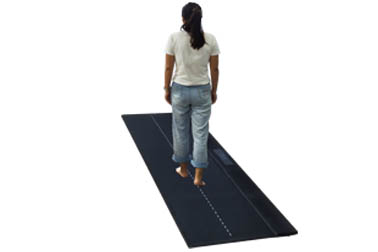


 +86-0755-86131192