
 +86-0755-86131192
 2025-04-08
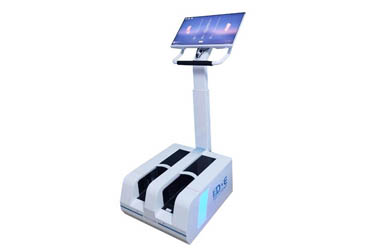
Advantages of the application of a flatfoot measuring instrument - a 3D foot scanner
1. Accurate morphological analysis
Millimeter-level 3D modeling
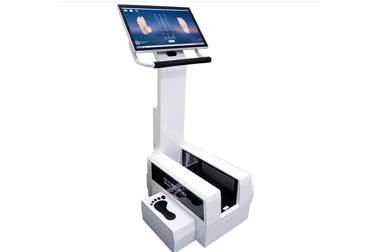
Using laser or structured light technology, the 3D morphology of the foot is captured with an accuracy of ±0.5mm, and key anatomical parameters such as arch height, plantar curvature, and calcaneal inclination angle are quantified, providing an objective basis for flatfoot grading (such as mild/severe collapse).
Compared with traditional methods: plaster molds are prone to deformation, and the wet footprint method can only reflect the two-dimensional contact surface and cannot restore the three-dimensional arch structure.
2. Non-invasive and efficient
Contactless fast scanning
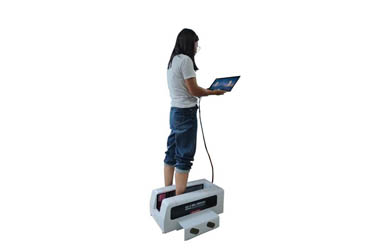
The patient can complete a single/double foot scan in 5-10 seconds of standing, without physical contact to avoid the risk of cross-infection, which is suitable for children, patients with sensitive skin, and large-scale screening scenarios.
Efficiency improvement: Traditional manual measurement takes more than 10 minutes per time, and 3D scanning can shorten the process to within 1 minute.
Digital archiving and tracing
Scanning data automatically generates standardized reports (including 3D models, arch height ratio, etc.), supports cloud storage and historical data comparison, and long-term tracking of arch development or correction effects.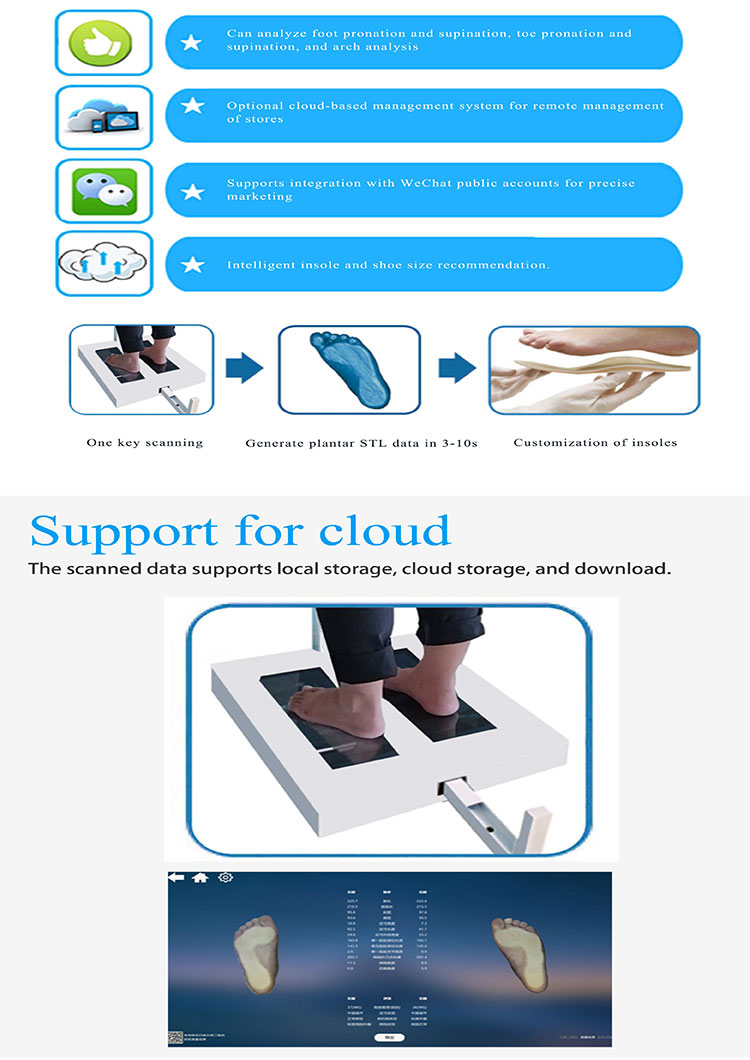
III. Personalized correction plan design
Precise customization of orthopedic equipment
Based on 3D model data, orthopedic insoles are designed through CAD software to accurately match the arch curvature, calcaneal support point and forefoot width to improve fit and comfort.
Case: The customization error of children's orthopedic insoles can be controlled within 1mm, reducing wearing rejection caused by size deviation.
Visual verification of correction effect
Regular retesting generates before and after correction comparison models, intuitively showing the improvement of arch morphology (such as an increase of 2-3mm in arch height), and enhancing the trust of doctor-patient communication.
IV. Multi-scenario technology extension
Support for biomechanical research
By associating the three-dimensional data of the foot with the whole-body biomechanical indicators such as knee joint force line and spinal posture, it assists in studying the long-term impact of flat feet on the kinematic chain.
Integration of 3D printing and intelligent manufacturing
Scanning data directly drives 3D printers to produce customized orthopedic devices, realizing the integrated process of "scanning-modeling-manufacturing", and compressing the traditional 2-week customization cycle to within 48 hours .
 Back to list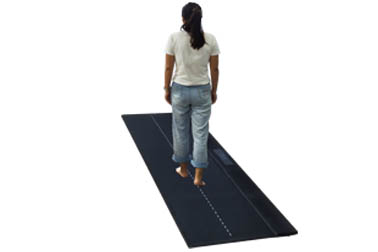


 +86-0755-86131192