
 +86-0755-86131192
 2025-08-26
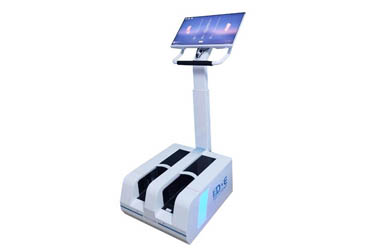
The application of the plantar pressure distribution system in injury prevention of professional athletes is mainly reflected in the following aspects:
I. Core Detection Functions
Abnormal Load Identification
By detecting forefoot/rearfoot pressure peak values (normal range: forefoot 35–45%, rearfoot 55–65%), early identification of risks such as plantar fasciitis and stress fractures.
Gait Cycle Analysis
Quantifying ground contact time (normal value 200–300 ms) and push-off efficiency (ideal value >60%) to optimize running economy.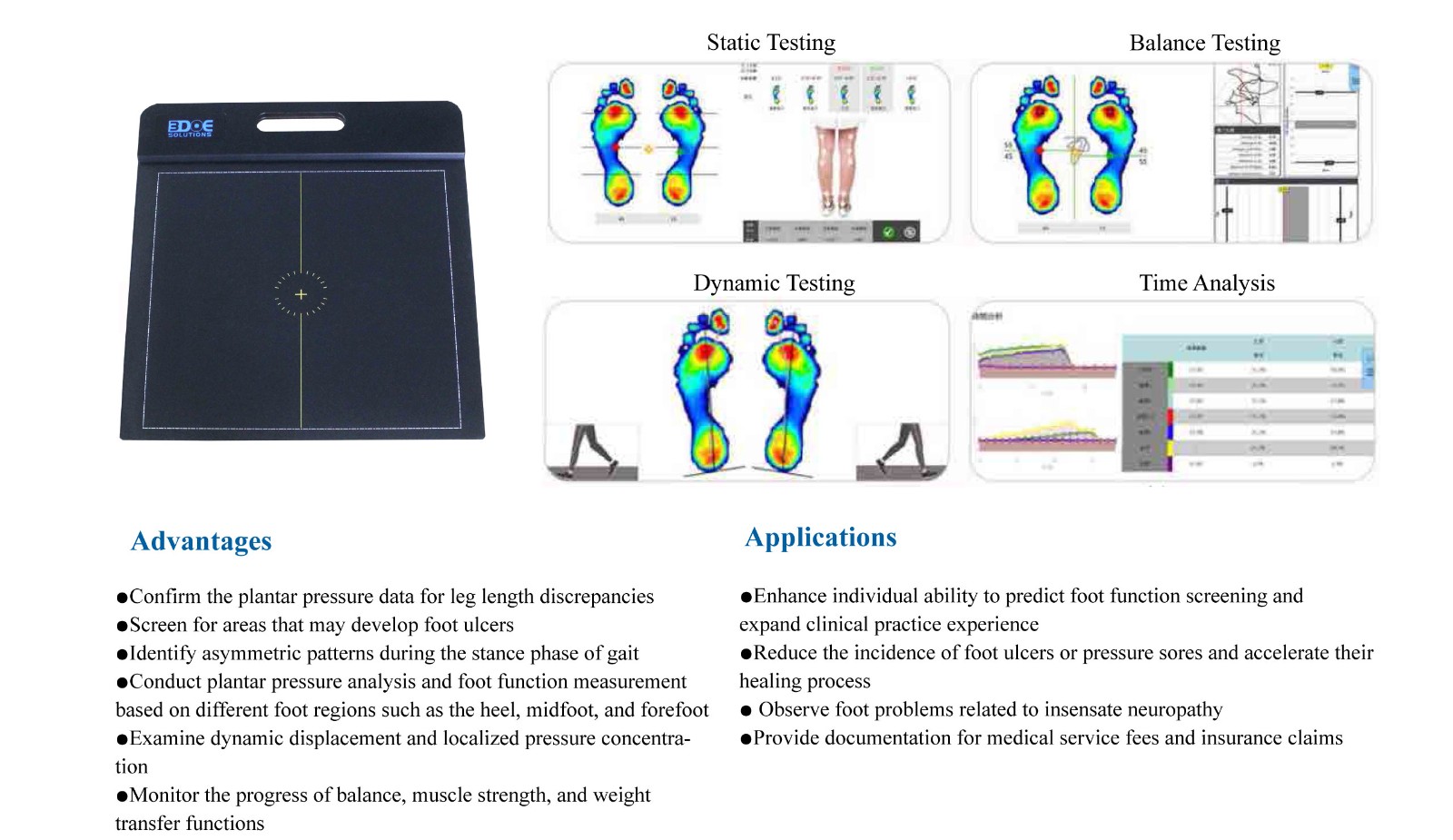
II. Clinical Prevention Programs
Dynamic Correction Guidance
Customized orthotic insoles combined with 3D scanning technology to reduce the standard deviation of pressure distribution to within 15% (original value often reaches 30–40%).
Muscle Fatigue Monitoring
By synchronously analyzing changes in plantar pressure and sEMG signals, providing early warning of gastrocnemius fatigue (MDF decrease >5 Hz requires intervention).
III. Technical Implementation Standards
Testing Protocol
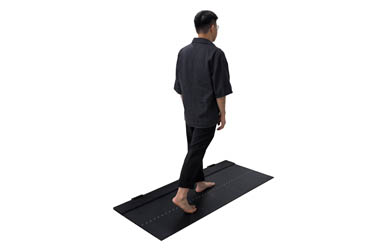
Data collection should include static standing (30 s) + dynamic walking (3 round trips) + sport-specific movements (such as sudden stop and change of direction).
Data Standards
It is recommended to use COP trajectory length (normal value <30 mm) and pressure center deviation (<10 mm) as core evaluation indicators.
Note: The latest research recommends combining inertial sensors for three-dimensional motion analysis, which can improve injury prediction accuracy to 92%.
 Back to list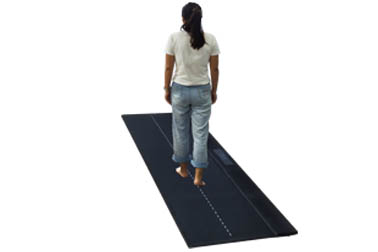


 +86-0755-86131192