
 +86-0755-86131192
 2025-08-29
Application of Plantar Pressure Distribution System in Orthopedic Insole Customization
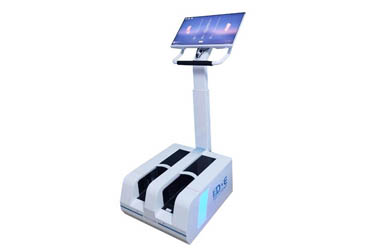
The application of the plantar pressure distribution system in orthopedic insole customization is mainly reflected in the following key links. Combined with current technological development and practical cases, its application value can be summarized as follows:
I. Accurate Data Collection and Foot Problem Diagnosis
Dynamic Pressure Analysis
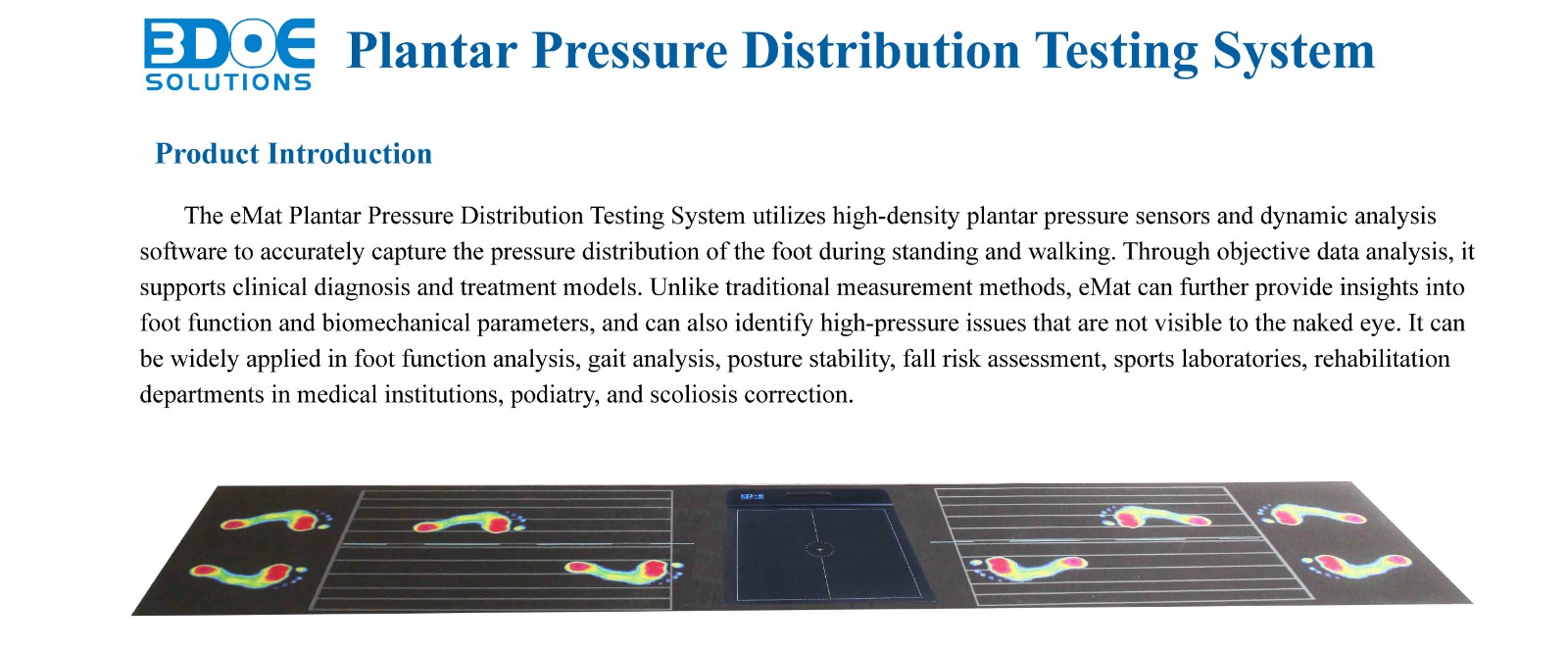
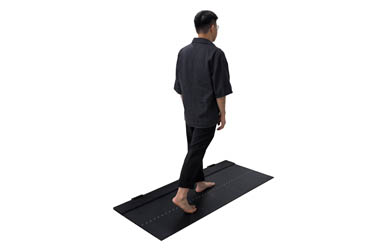
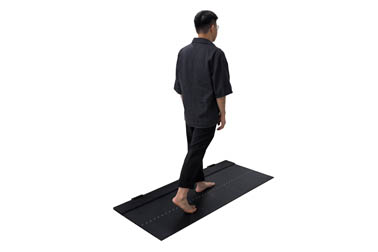
Capture pressure distribution during standing/walking through high-sensitivity sensor array (3000 points/second sampling rate), generate heat maps to quantify abnormal indicators such as arch collapse and pressure peaks.
Combined with gait cycle (landing, support, push-off phases) analysis, identify gait compensation problems caused by deformities such as flatfoot and high arch.
Biomechanical Modeling
Integrate 3D scanning with pressure data to construct a “digital twin” model of the foot, accurately measuring arch height, joint angle, and center-of-gravity trajectory.
II. Personalized Insole Design Process
Material and Structural Optimization
Based on pressure distribution data, set shock-absorbing honeycomb structures in the forefoot of the insole, adopt gradient support frames in the arch area, and design energy-feedback domes in the heel.
Medical-grade TPU material achieves local hardness differences (e.g., 30 Shore A gradient) through 3D printing, improving comfort and functionality.
Application of 3D Printing Technology
Selective Laser Sintering (SLS) technology replicates microstructures with 0.1 mm accuracy, ensuring the orthopedic insole completely fits the plantar morphology.
Dynamic simulation of 100,000 gait cycles verifies design rationality, avoiding adaptation failure problems of traditional insoles (traditional adaptation success rate less than 45%).
III. Clinical Verification and Effect Evaluation
Real-time Monitoring and Feedback
Quantify the improvement effect of insoles on arch support and pressure dispersion (e.g., reduction of diabetic foot ulcer risk) through regular re-testing of pressure distribution.
Adjustment scheme: optimize insole structure according to symmetry of pressure center trajectory to reduce extra load on knee joints (traditional insoles may increase load by 22%).
Multi-scenario Adaptation
Sports field: Customize shock absorption/support schemes for athletes (e.g., sprint insoles improve performance by 0.01 seconds).
Occupational protection: Design cushioning areas for long-term standing workers to relieve plantar fasciitis.
Summary of Technical Advantages
Precision Medicine: Transition from “cutting feet to fit shoes” to biomechanical-based personalized correction.
Efficient Production: 3D printing technology shortens customization cycle, cost reduced by 40% compared with traditional process.
Full-cycle Management: Covering the entire process of diagnosis, design, and evaluation, with data-driven continuous optimization.
 Back to list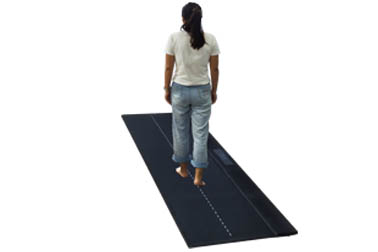


 +86-0755-86131192