
 +86-0755-86131192
 2025-12-15
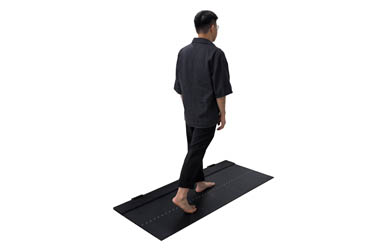
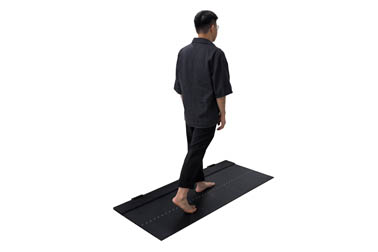
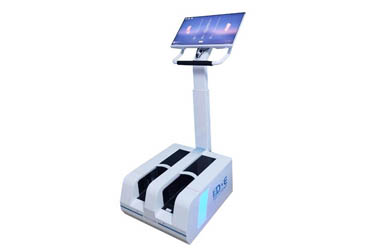
A plantar pressure plate is a device that monitors the temporal changes of plantar pressure, force symmetry, and associated limb activity data when a patient walks.
A plantar pressure plate has a built-in high-response pressure sensor array and data acquisition module.
Currently, the popular sensing technologies on the market include: thin-film pressure sensing technology, piezoelectric ceramic sensing technology, and capacitive array sensing technology.
These technologies can capture the dynamic fluctuations of pressure in various areas of the sole and the difference in force between the two feet when the patient walks at a constant speed or in a specific gait.
The dynamic sampling frequency of the device is usually 100 to 500 Hz.
After the data is collected, it is processed by special computer analysis software, and a recovery evaluation report is generated, which includes pressure time-series curves, bipedal symmetry index, pressure distribution in gait phases, limb force coordination, etc.
There are generally three types of monitoring and evaluation modes for plantar pressure plates, namely constant-speed walking monitoring, variable-speed walking monitoring, and specific gait simulation monitoring.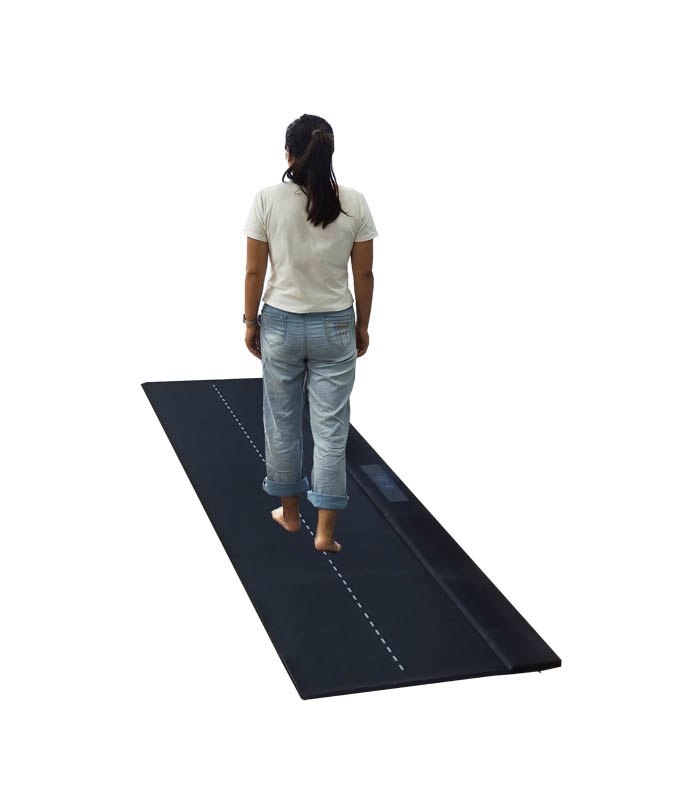
Different recovery stages and evaluation needs can choose the corresponding monitoring and evaluation mode.
For example, for basic force evaluation in the early stage of rehabilitation, only constant-speed walking monitoring data is generally needed.
For example, dynamic function evaluation in the mid-term of rehabilitation requires the variable-speed walking monitoring mode.
For example, the evaluation of return-to-life ability in the late stage of rehabilitation may require the specific gait simulation monitoring mode.
The rich monitoring and evaluation modes can adapt to the limb function evaluation needs of patients in different rehabilitation stages.
The most common application scenarios of plantar pressure plates in monitoring pressure changes and evaluating limb recovery are as follows:
1. Application in the rehabilitation evaluation of stroke patients.
In the rehabilitation evaluation of stroke patients, it can be used to monitor the difference in plantar pressure between the affected side and the healthy side, judge the recovery of limb muscle strength, evaluate the effect of gait correction, and guide the optimization of rehabilitation training plans.
2. Application in post-operative rehabilitation of orthopedic and joint injuries.
It tracks the changes of plantar pressure when post-operative patients walk, evaluates the recovery degree of joint load-bearing capacity, such as adjusting the intensity of rehabilitation training, guiding correct walking posture, etc., and can also verify the adaptation effect of post-operative braces.
3. Application in the functional evaluation of patients with spinal cord injury.
For example, it conducts scientific analysis on the law of plantar pressure transmission and the balance control ability of both feet when the patient walks.
It conducts evaluation and research on the recovery potential of limb motor function and the risk of secondary injury.
4. Application in the rehabilitation monitoring of lower limb nerve injury.
For example, it is used to monitor the recovery of plantar sensation and limb motor coordination ability when the patient walks, predict the rehabilitation process, and formulate personalized intervention plans.
 Back to list


 +86-0755-86131192