
 +86-0755-86131192
 2026-05-18
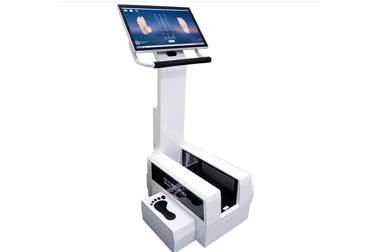
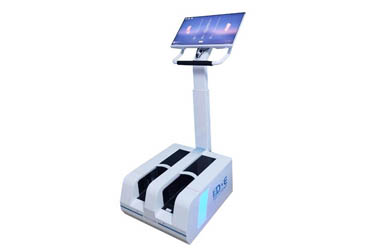
The main function of the plantar 3D laser scanner is to scan the sole of the foot based on the optical principle of laser, so as to obtain plantar morphological data and three-dimensional models.
The accuracy of 3DOE plantar 3D scanner reaches 0.5mm, ranking among the top in the current industry. Such accuracy is applicable to multiple scenarios and can meet the demands of insole production and other applications.
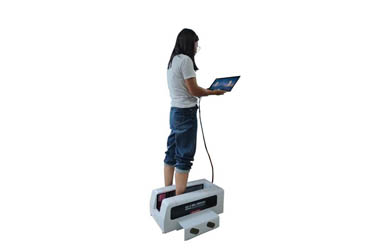
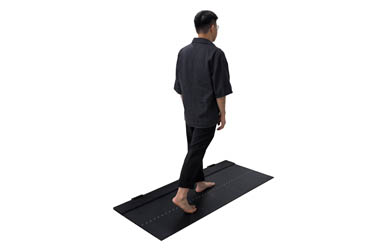
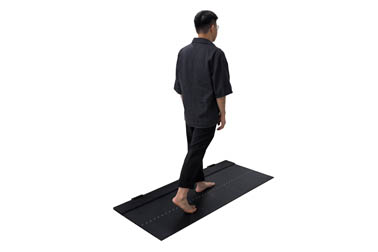
The measurement operation is extremely simple. The system is equipped with voice guidance on the software side. Users only need to stand on the scanning device and follow the voice prompts to complete operation. The whole measurement process is very short, which only takes 10 to 20 seconds.
After measurement, users can obtain the measurement report by mobile phone scanning, or print and save it on computers. Data in formats such as STL can be saved via USB flash drives and other means.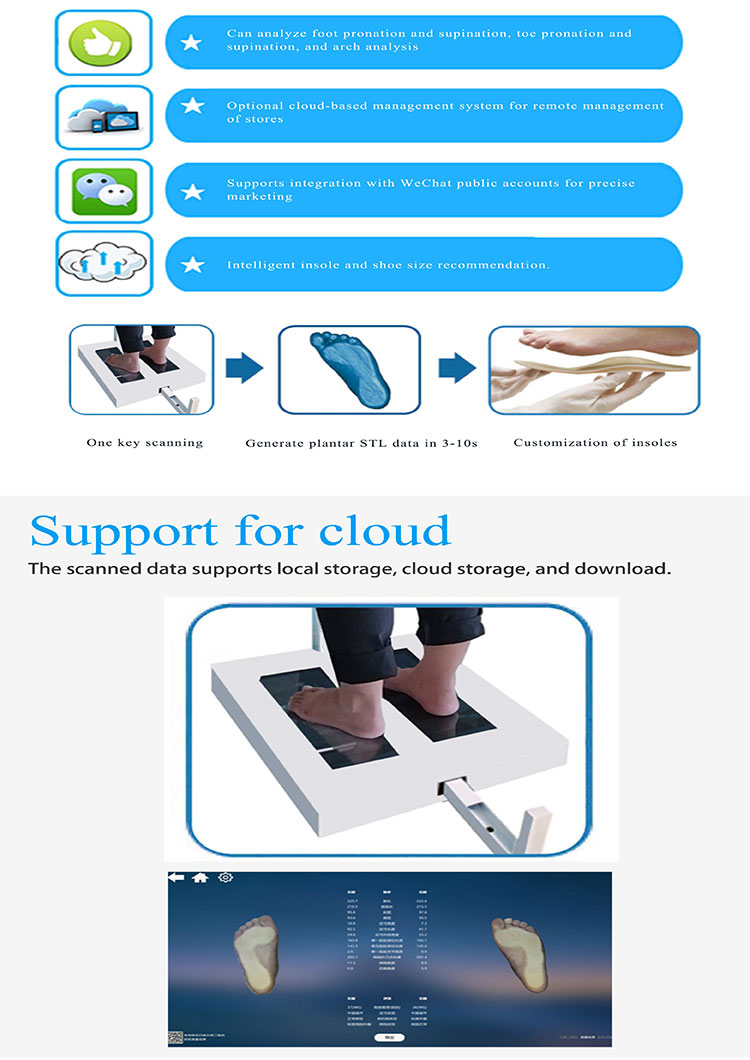
一. How does the plantar 3D laser scanner evaluate flat feet and high foot arches?
Judgment is mainly made from the following dimensions:
1. Judge according to foot arch height
The foot arch height of flat feet is in a collapsed state and almost close to the ground.
The middle part of high foot arch is obviously suspended in the air.
The radian of normal foot arch is moderate.
In addition, the judgment is based on scientific reference data instead of simply judging by pictures.
2. Judge according to foot arch index
The software divides the foot arch into three parts: forefoot, midfoot and heel.
The foot arch index is calculated in this way.
Foot arch index = midfoot area / total foot area.
If the foot arch index is higher than the specified standard, it means flat foot, and the higher the value, the more serious the flat foot is.
If the foot arch index is lower than the specified normal standard, it means high foot arch, and the lower the value, the more serious the high foot arch is.
二 . How to make insoles with the help of plantar 3D scanner?
1. Obtain three-dimensional data in formats such as STL of the sole through foot scanning.
2. Import the scanned STL and other 3D data into the design system namely CAD system for targeted design. For instance, carry out correction design for flat feet and high foot arches. Relevant design shall be conducted at corresponding positions in accordance with measured data to reasonably distribute plantar pressure and adjust supporting points and supporting strength.
When designing insoles for flat feet, designers usually raise foot arch supports and strengthen inner side supports to guide foot arches to return to normal positions, and meanwhile avoid excessive inward rotation.
When designing insoles for high foot arches, the main measures are to add cushioning pads to disperse pressure on forefoot and heel, and arrange proper filling supports in the middle part to relieve compression caused by empty suspension.
All designs shall be formulated according to specific measured data.
3. Proceed with insole production
Insole production is mostly completed by 3D printers or insole engraving machines.
Process the finished design data to make it compatible with corresponding equipment, then import the processed data into 3D printers or insole engraving machines for production.
Insole engraving machines generally adopt EVA foam as raw material, while 3D printers mainly use TPU and PU materials for production.
4. Conduct polishing and surface attaching treatment
After insoles are manufactured, surface polishing and surface attaching treatment are required to make the appearance more beautiful and fashionable. Customers can choose favorite surface fabrics according to personal demands.
Finished insoles can be delivered to customers by express delivery for daily wearing.
If customers feel uncomfortable during wearing, designers shall redesign insoles according to actual conditions to ensure the produced insoles achieve genuine correction effect, which requires regular follow-up visits and after-sales tracking.
 Back to list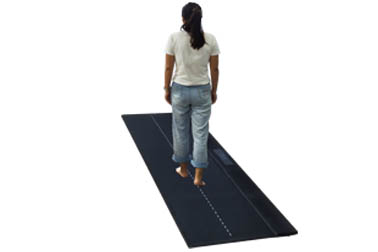


 +86-0755-86131192