
 +86-0755-86131192
 2025-12-05
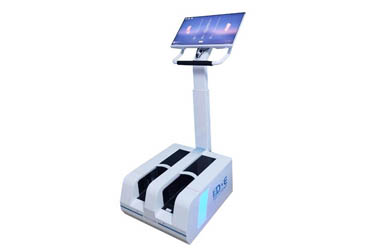
Introducing foot 3D laser scanners into offline stores usually has the following functions:
1. Improve service professionalism, enhance customer trust, and create differentiated competitive advantages.
Through 3D laser scanning, accurate foot data of customers can be quickly obtained, providing customized recommendations. The service process is professional and standardized, and customer acceptance is high.
The accurate foot data obtained can be directly applied to in-store fitting and order matching for customized footwear and orthotic insoles.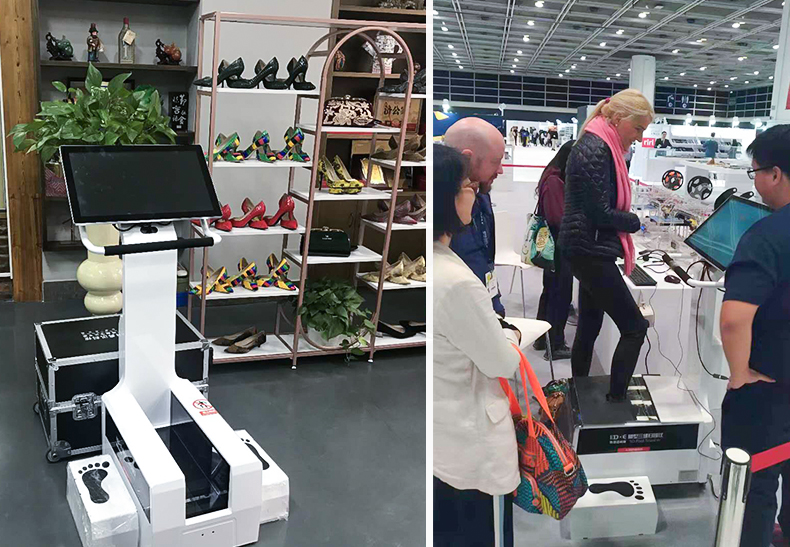
2. Improve service efficiency and reduce customer waiting time.
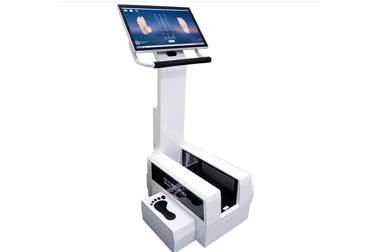
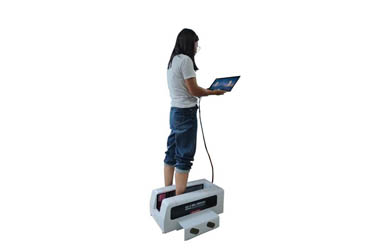
Generally speaking, using an in-store 3D laser scanner for measurement only takes 3–20 seconds to complete the customer’s foot scan and obtain complete data.
If using traditional manual measurement methods, not only is the data error large, but it also takes a much longer time — more than ten minutes or even longer.
3. Optimize customer experience and lower the experience threshold.
The foot 3D laser scanners introduced in stores adopt non-contact measurement. Data is obtained by scanning the foot surface with a laser beam, without the need to touch the foot.
This measurement method can avoid discomfort caused by contact during measurement and reduce hygiene concerns that may arise from manual contact measurement.
It is especially suitable for children, people with sensitive skin, or customer groups who value privacy and hygiene.
4. Support precise stocking and reduce inventory pressure.
By accumulating customer foot data from scans, analyzing foot feature patterns of local customers can guide product category and size ratio for footwear, insoles, etc.
Especially in stores with a high proportion of customized products, data can precisely connect to the upstream supply chain, reducing unsold inventory and improving capital turnover rate.
5. Enrich marketing scenarios and attract store traffic.
With “free 3D foot testing” and “customized service experience” as marketing highlights, potential customers are attracted to visit the store, driving foot traffic and associated consumption.
At the same time, through visual display of test data, customer purchase intention can be strengthened, helping to increase the store’s average transaction value.
 Back to list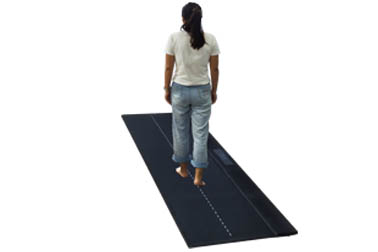


 +86-0755-86131192