
 +86-0755-86131192
 2025-12-05
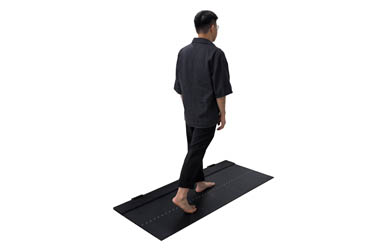
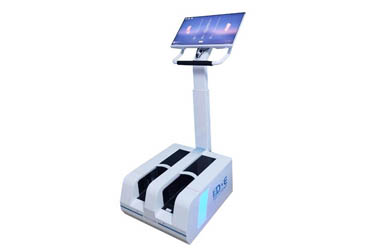
The application of plantar pressure distribution systems in children’s gait detection is an important means of measuring children’s plantar pressure distribution data, gait development characteristics, and center-of-gravity changes.
The application of plantar pressure distribution systems in children’s gait detection is built with a high-density sensor array.
At present, the more popular types in the market include: flexible resistive sensors, low-sensitivity piezoelectric sensors, and capacitive sensors.
These adapted sensors can perceive the pressure conditions at different parts of the plantar surface when children stand still or walk on the system.
The sampling frequency of the sensors is usually from tens to several hundred Hz.
After the data is collected, it is analyzed by software on a computer, forming a digital report, which includes children’s pressure distribution maps, moving center-of-gravity trajectories, stride length, step frequency, gait cycle, etc.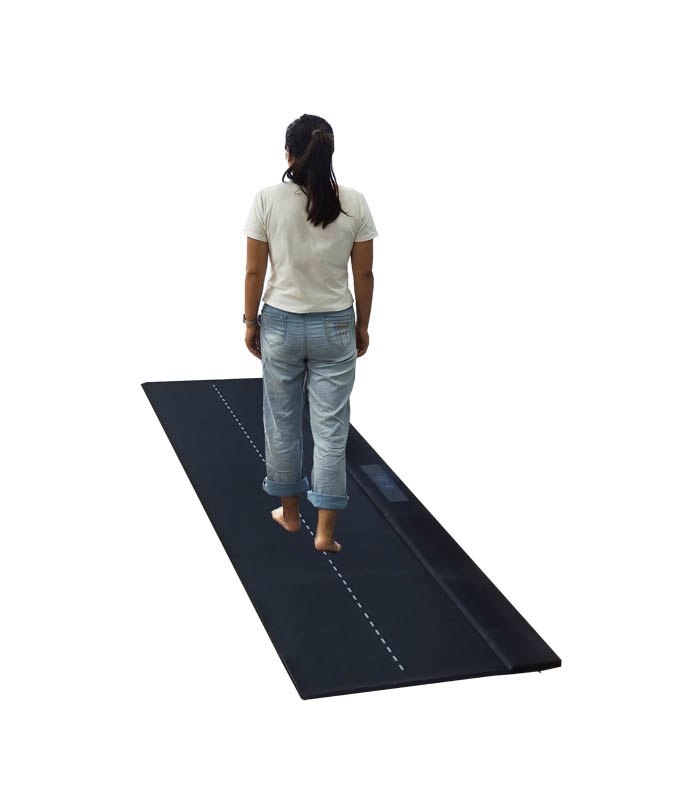
The application of plantar pressure distribution systems in children’s gait detection generally includes three types of testing modes: static measurement, dynamic gait measurement, and balance-ability measurement.
Different testing needs and application scenarios allow selection of the corresponding measurement mode.
For example, for customized orthotic insoles for children, static measurement data alone is usually sufficient.
For balance ability testing of children with developmental delays, the balance-ability measurement mode is required.
For optimization of children’s sports gait, the dynamic gait measurement mode may be needed.
The richness of measurement modes allows application to a wider range of children’s gait detection scenarios.
The most common areas where the significance of using plantar pressure distribution systems in children’s gait detection is reflected include:
1. Application in clinical rehabilitation.
In clinical rehabilitation, it can be used for diagnosing children’s flatfoot, high-arched feet, valgus feet, varus feet, foot interventions for children with cerebral palsy, and postoperative rehabilitation assessment and monitoring.
2. Application in motor development.
It is used to analyze children’s gait and optimize motor development performance, such as correcting walking posture and adjusting heel-strike posture, and can also be used for optimization design of children’s shoes and orthotic devices.
3. Application in biomechanics.
For example, scientific research on the relationship between children’s plantar pressure and body posture and gait stability.
Research on children’s bone and joint loading and motor development risk assessment.
4. Application in daily health monitoring.
For example, measuring children’s gait development progress, balance ability, and fall-risk prediction and intervention plans.
For example, monitoring delays in children’s gait development, evaluating foot deformity correction effects, and formulating personalized rehabilitation plans.
 Back to list


 +86-0755-86131192