
 +86-0755-86131192
 2026-04-14
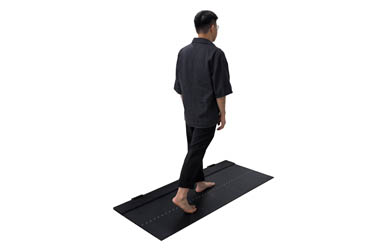
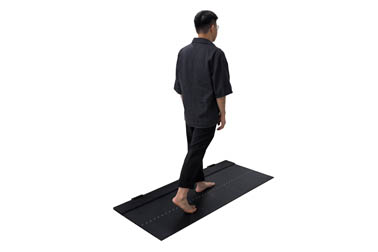
eWay1500 is a plantar pressure and gait analysis system independently developed by 3DOE. The device is approximately 1.5 meters in length, with specific physical dimensions of 1570×680×20mm.
Among 3DOE’s plantar pressure plate series, the eWay1500 is of medium length; there are other shorter models as well as longer models.
The eWay1500 adopts a USB interface for connection, with a net weight of approximately 13kg, around 30,000 sensor points, a sensing point density of 4 sensors per cm², and a maximum load capacity of 300KG.
The working principle of the eWay1500 is as follows: a high-density sensor array is built inside the pressure plate. When a person stands still, walks, or passes over the pressure plate in other motion states, these array sensors can sense the pressure magnitude of various parts of the human foot in real time, transmit the data to the computer system in the form of digital signals, conduct data analysis and modeling through software, and finally generate visualized and charted measurement reports.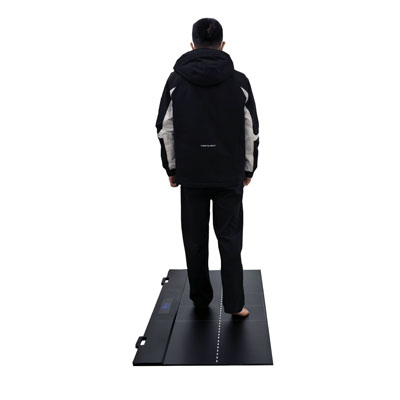
Its measurement data include: under static measurement, total foot pressure, total foot contact area, forefoot pressure ratio, high-pressure points, average pressure, forefoot contact area, forefoot maximum pressure, forefoot average pressure, arch type judgment (flatfoot, high arch), heel width, heel contact area, heel maximum pressure, heel average pressure, heel angle, heel type, lower leg angle, lower leg type (normal foot type, varus, valgus, etc.), and characteristic area analysis (pressure, left/right foot pressure, area, pressure intensity); under balance state, center of gravity trajectory length, 95% confidence ellipse area, basic support area, maximum anterior-posterior center of gravity distance, maximum left-right center of gravity distance, mean and maximum values of anterior-posterior and left-right center of gravity velocity, center of gravity trajectory diagram, and sway curve diagram; under dynamic state, foot pressure line trajectory diagram, gait curve analysis, gait parameters (step length, stride length, step width, step time, stride time, cadence), toe-out angle, etc.
The eWay1500 has three measurement modes, namely static measurement, dynamic measurement, and balance measurement.
Users can select the appropriate measurement mode according to different application scenarios and requirements.
Static measurement is mainly used to judge foot structure and analyze whether the force distribution is balanced. It can evaluate flatfoot, high arch, foot varus, foot valgus, and assist in posture assessment, indirectly reflecting problems such as pelvic tilt and spinal scoliosis. It is mainly used to identify structural problems of the foot and problems caused by long-term habits.
Dynamic measurement mainly involves walking back and forth 2 to 3 times to collect data on the plantar pressure plate, which is the core part of gait analysis.
Dynamic measurement is mainly used to evaluate gait parameters such as step length, cadence, walking speed, support time, etc. In addition, it can detect gait abnormalities based on the data and determine the presence of lameness, foot drop, toe-in gait, toe-out gait, diabetic foot risk, etc.
Dynamic data can also be applied to the adjustment of athletic force exertion, reducing sports injury rates and improving athletic performance.
There are two test methods for balance measurement: one is normal standing still with eyes open and looking forward; the other is eyes-closed test, which focuses on testing neural control ability.
The key data of balance test are the center of pressure trajectory, namely COP trajectory and body sway range.
The more concentrated the center of pressure trajectory is, the better the stability is. On the contrary, messy or wide-ranging trajectory indicates poor stability.
The larger the sway area, the worse the stability; the smaller the sway area, the better the balance.
Balance data are mainly applied to fall risk assessment for the elderly, core stability training for athletes, sensory integration ability assessment for children, and rehabilitation assessment for stroke/nerve injury, etc.
 Back to list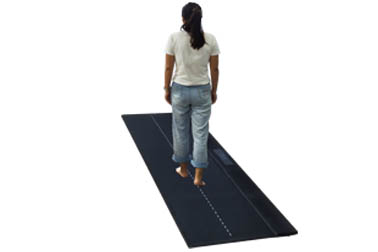


 +86-0755-86131192