
 +86-0755-86131192
 2026-04-14
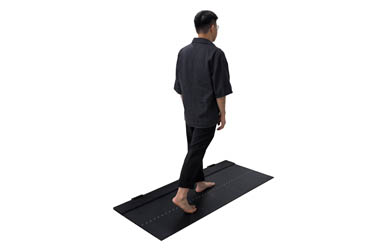
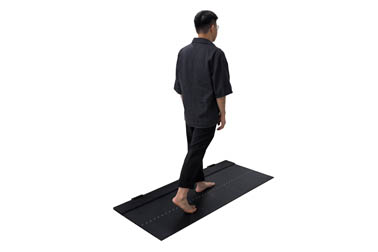
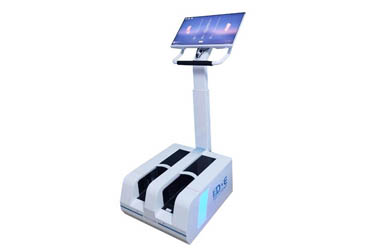
eWay1500 is a plantar pressure and gait analyzer independently developed by 3DOE. It is equipped with 30,000 sensors, with a sensing point density of 4 sensors per cm². Its dimensions are 1570×680×20mm, with a net weight of 13kg, and it adopts a USB interface for connection.
This device supports three measurement modes, namely static measurement, dynamic measurement, and balance measurement.
Static measurement refers to the detection of pressure distribution in various parts of the plantar when a person stands still.
Through static measurement, the basic structure and stress state of the human foot can be evaluated. Data can be used to determine the presence of foot problems such as flat feet, high arches, foot varus, and foot valgus. Data can also be used to judge whether the pressure of the left and right feet as well as the forefoot and hindfoot is symmetrical, and to assess the deviation of the body's center of gravity.
Dynamic measurement refers to the continuous collection of relevant gait data such as plantar pressure distribution by the plantar pressure distribution system when a person is walking or exercising.
Data obtained from dynamic measurement can be used to evaluate gait parameters such as step length, step frequency, and support time. It can also detect gait abnormalities such as limping, foot dragging, toe-in gait, and toe-out gait, and determine whether excessive pressure exists in certain areas during walking. Based on these data, it can also help athletes adjust their force exertion methods to improve athletic performance.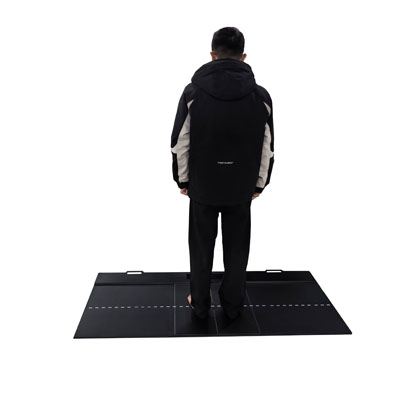
In simple terms, dynamic measurement records various plantar data during human movement.
Balance measurement mainly evaluates a person's ability to maintain stability while standing, which is accomplished mainly by analyzing the center of pressure trajectory.
There are generally two test methods for balance measurement. One is standing still with eyes open and the body naturally relaxed. The other is the eyes-closed test, which can better reflect neural control ability.
These two test modes are selected according to specific application scenarios and required data.
During the balance test, the more concentrated the center of pressure (COP) trajectory is, the better the stability is. If the COP trajectory is scattered or covers a wide range, it indicates poor balance ability.
Balance ability can also be judged by the sway area. The larger the sway area is, the worse the body's balance ability is. In addition, stability can be assessed by sway velocity; the faster the sway velocity is, the poorer the control ability is.
Balance tests are commonly applied in fall risk assessment for the elderly, rehabilitation assessment for stroke or nerve injury patients, core stability training for athletes, and sensory integration ability assessment for children, among others.
 Back to list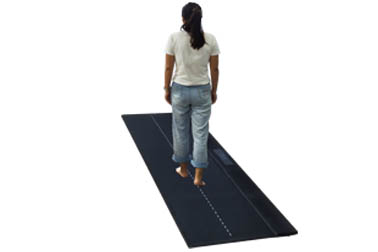


 +86-0755-86131192