
 +86-0755-86131192
 2026-09-09
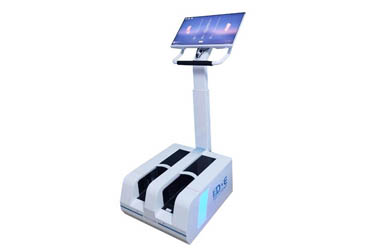
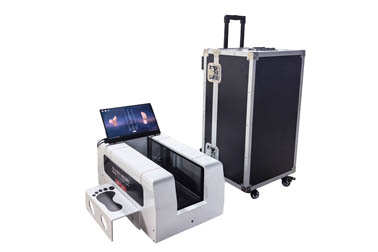
The plantar pressure plate mainly detects data such as the pressure distribution of different parts of the sole of the foot under different movement conditions by means of a large number of array-type pressure sensors built inside the plate.
The main testing modes of the plantar pressure plate are: static measurement, balance measurement, and dynamic measurement.
Static assessment through static standing.
The testing method in this mode is very simple, and it only requires standing still in the sensing area of the pressure plate.
During the measurement, it is best to be barefoot, the body should remain relaxed and natural during the measurement, and do not deliberately maintain a certain posture. The measurement time is very short, and generally only 3–10 seconds is needed.
Static measurement mainly analyzes the following aspects:
(1)According to the weight-bearing data of both feet, assess the symmetry of weight bearing on both sides of the body.
(2)According to data such as the arch coefficient and the contact area of the midfoot, determine the type of the foot arch, whether there is flatfoot or high arch, as well as the severity, and at the same time, the risk of arch strain can also be assessed.
(3)The sole of the foot is divided into 10 characteristic regions, including the heel, midfoot, forefoot metatarsals, toes, etc. By comparing the force distribution of each characteristic region of the soles of the left and right feet, assess the deviation of the foot force line in the standing state.
(4)Through data such as heel shape and overall foot width, assess and determine the morphological characteristics of the foot.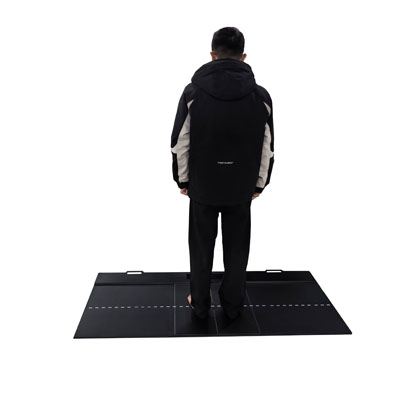
Foot assessment through balance measurement.
The method of balance measurement is the same as that of static measurement, and it only requires standing barefoot, still and naturally, in the sensing area of the pressure plate. The measurement process can also be completed in about 3–10 seconds.
Balance measurement mainly measures the sway data of the center of pressure (COP) while standing.
Through the center-of-gravity trajectory and the area covered by the sway, assess the stability of the body while standing.
Of course, it is also necessary to distinguish the degree of sway in the forward-backward direction and the left-right direction, as well as the speed of the sway. Through these measurements, it can be determined in which direction our body has relatively weak control ability, and targeted rehabilitation training can then be carried out for improvement.
Foot assessment through dynamic measurement.
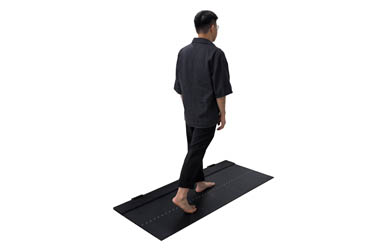
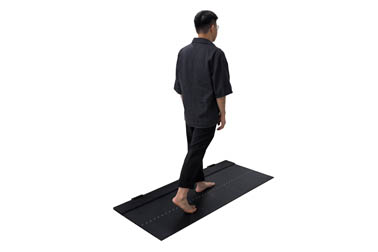
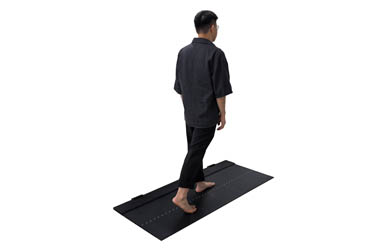
During dynamic measurement, the person needs to walk naturally barefoot back and forth across the pressure plate area 3–5 times, so as to collect complete gait cycle data.
(1)By comparing the duration of each complete stance phase and the pressure distribution data of the left and right feet, determine the symmetry of both feet.
(2)Through the foot progression angle data, determine the rotational state during walking, thereby assessing whether there are conditions such as intoeing or out-toeing, as well as related potential risks of rotation of the lower leg and lower limbs.
(3)Through the landing sequence, the duration of pressure on each part, and the sequential pressure curves of the heel, arch, metatarsals, and toes during walking, determine and assess the risk points of excessive local pressure during walking.
Application scenarios.
Through plantar pressure measurement data, applications can be carried out such as flatfoot / high-arch foot screening, before-and-after comparison of custom orthotic insoles, plantar fasciitis, metatarsalgia, diabetic foot pressure risk assessment, gait assessment for stroke / cerebral palsy, sports injury screening, adolescent foot development assessment, etc.
Note: Plantar pressure is only a biomechanical assessment tool and only reflects pressure distribution. It cannot independently replace imaging examinations and clinical physical examinations. It can be used to guide insole selection and rehabilitation training, and can also be used as a reference for comparison before and after subsequent interventions.
 Back to list


 +86-0755-86131192