
 +86-0755-86131192
 2026-09-08
Traditional footwear research and development often relies on standard shoe sizes, manual fitting, and experience-based judgment, but these methods can mainly only determine the shoe size and wearing experience, and cannot visually show the pressure changes in different areas of the plantar surface when the human body is standing or walking, and when facing conditions such as concentrated forefoot pressure, excessive heel loading, different loads between the left and right feet, and abnormal pressure in the arch area, it is difficult to accurately quantify and analyze them through traditional methods, making it difficult to truly support the refined development of footwear products, and even if additional manual testing and repeated fitting are added, the development cycle will also increase, and the time cost and trial-and-error cost are relatively high.
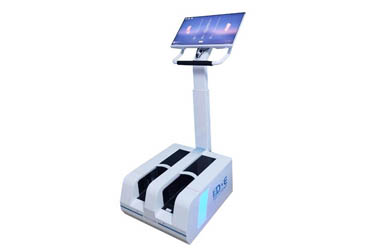
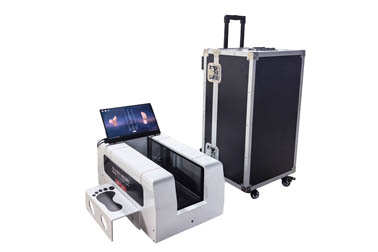
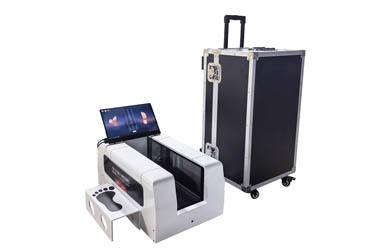
A plantar pressure measurement device is based on plantar pressure sensing technology, converts the pressure changes generated during contact between the human foot and the sole / ground into visualized digital data, and connects the entire process of pressure collection—data processing—foot assessment—product design—effect verification, allowing footwear development to gradually shift from relying on “wearing feel” in the past to analysis based on real plantar pressure data.
Main technical principle: the pressure sensor array senses the pressure changes at different positions of the plantar surface in real time + the data acquisition system records them synchronously → pressure signals are digitally processed → pressure distribution is calculated → plantar pressure maps, pressure curves, and center-of-pressure trajectories are generated, and data such as pressure distribution, peak pressure, contact area, and left-right foot loading differences in the forefoot, arch, heel, and other areas are further obtained.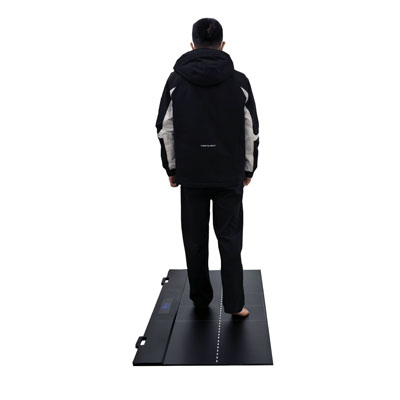
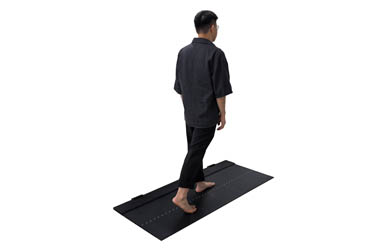
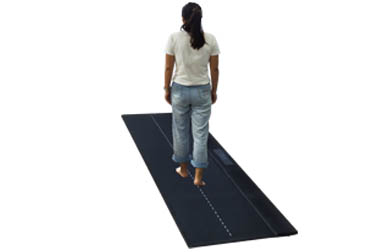
Main measurement steps: simply take off your shoes and socks, stand on the pressure testing platform according to the test requirements, or walk normally within the testing area according to the system requirements, and the device will automatically record the changes in contact pressure between the human body and the testing surface, and no complicated manual operation is required during the test, and the standing or walking test can be completed according to the device prompts, and a visual plantar pressure result can usually be obtained within a relatively short time.
The main data is used for analysis and assessment: identify plantar pressure concentration areas, the loading ratio between the forefoot and rearfoot, left-right foot load differences, and the movement pattern of the center of pressure, and combine pressure changes during standing and walking to determine the plantar loading characteristics under different states; used for footwear development, insole design, sports shoe performance analysis, functional shoe fitting, and personalized foot assessment.
For footwear development, the key lies in how plantar pressure data is converted into a basis for product design, and the process is: organize and analyze the plantar pressure data obtained from testing, determine the key areas to focus on according to the application scenario of different footwear products, and then adjust the insole, outsole, and related structural parameters according to conditions such as excessive pressure concentration, insufficient support, or left-right foot loading differences, so that product design no longer completely relies on the experience of R&D personnel, but instead has real plantar pressure data as a reference.
The digital design of insoles and footwear products includes: customized insoles (optimizing arch support, cushioning areas, and pressure-distribution structures according to plantar pressure distribution), functional footwear design (adjusting outsole hardness, cushioning, and support structures according to the loading characteristics of different areas), sports shoe development (optimizing outsole and insole solutions based on pressure changes under different sports conditions such as running and walking).
There are two types of manufacturing output, one is to provide the analyzed and adjusted design parameters to CNC processing equipment to produce customized insoles, outsoles, or related structures, and the other is to quickly produce test samples through 3D printing and other digital manufacturing methods for subsequent fitting and performance verification.
After the product is completed, it is recommended to also have the following process: finished-product fitting / trial use → collect plantar pressure data again → compare the pressure changes before and after the design → identify new loading problems → adjust the insole / outsole structure → remake, forming a closed loop of “testing—analysis—design—manufacturing—verification,” so that every product optimization has actual data as its basis.
The main application scenarios of plantar pressure measurement devices include:
Footwear new retail stores (plantar pressure testing + personalized footwear recommendations).
Footwear company R&D (establishing plantar pressure databases for different groups of people and assisting in outsole / insole structural development).
Medical rehabilitation and orthotics (assisting in observing plantar loading characteristics and providing data references for the design of functional footwear and orthotic insoles).
Sports performance customization (testing plantar pressure changes under different sports conditions and assisting in the optimization of sports shoes and insole performance).
People with special needs (conducting more detailed foot assessments and product fitting for conditions such as left-right foot load differences and localized pressure concentration).
Of course, if you want to develop corrective insoles or corrective shoes, it is better to combine a foot 3D scanning system with gait analysis and other data for comprehensive testing, because plantar pressure measurement mainly addresses the question of “what forces the foot is experiencing and where the pressure is higher,” while 3D scanning mainly addresses the question of “what the shape and dimensions of the foot are,” and after combining the two types of data, targeted structural design can then be carried out according to the actual test results, so that the design of the insole or footwear can consider both the external shape and loading characteristics of the foot, avoiding judgments based only on a single type of data.
If the budget is limited, only a plantar pressure measurement device and a carving machine / 3D printer are also sufficient, and you can completely start with plantar pressure testing, data analysis, and customized insole production, adjust the insole support, cushioning, and pressure-distribution structures according to the test results, and then gradually add equipment such as foot 3D scanning and gait analysis, ultimately establishing a more complete personalized foot assessment and footwear customization system.
 Back to list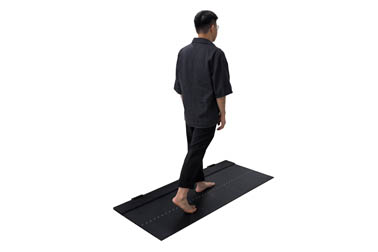


 +86-0755-86131192