
 +86-0755-86131192
 2026-07-06
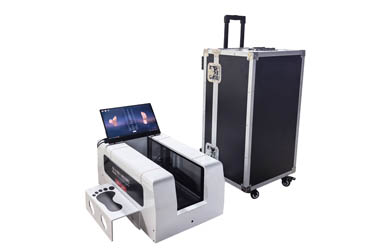
A 3D foot scanner adopts optical principles such as laser to conduct all-round scanning and measurement of the foot, capturing plantar morphological data as well as 3D data in formats including STL.
3D foot scanners are widely applied in fields such as medical rehabilitation, shoe retail stores, sports training, and footwear R&D.
The functions of the foot scanner are listed as follows:
1. Accurate shoe size matching. Measurements taken by the foot scanner precisely capture foot dimensions including foot length and foot width, and calculate accurate shoe sizes. This helps users select insoles and shoes that fit their foot shape perfectly.
2. Higher in-store conversion rates. Installing foot scanners in offline shoe shops attracts customers to experience foot measurement. Customers can fully understand their foot health status; the device delivers strong technological sense and professionalism, bringing an improved customer experience, boosting customers’ willingness to purchase products and lifting conversion rates.
3. Customization of leather shoes, high-end sports shoes and orthopedic shoes. The 3D foot scanner collects over 60 sets of measurement data and generates 3D data in STL and other formats. The acquired 3D data can be imported into professional design software to directly build shoe last models, followed by personalized shoe last design, enabling the production of custom shoes and orthopedic shoes that fit individual feet perfectly.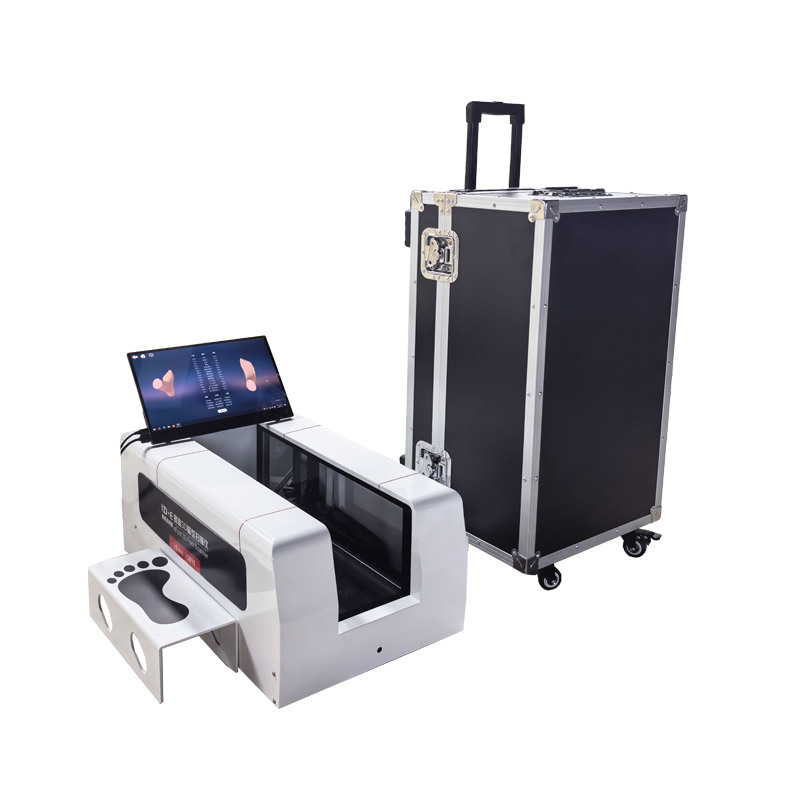
4. Hospital applications. Foot scanners deployed in hospitals enable rapid assessment of foot deformities such as flat feet, high arches, heel varus, heel valgus and hallux valgus. Precise measurement data and evaluation criteria are provided; all data and assessment results are presented in graphical forms in measurement reports, which are easy to understand, intuitive and clear.
5. Applications in sports rehabilitation. Foot data obtained via scanning supports the production of matching custom insoles and footwear, optimizing plantar force distribution and lowering risks of ankle sprains, plantar fasciitis and other sports injuries.
6. Monitoring children’s foot development. The age bracket of 3 to 14 years old marks the developmental period of children’s foot arches, when foot bones are not fully ossified. Regular foot scans allow early detection of potential foot problems arising during growth, facilitating timely correction.
7. Foot database collection. Large-scale foot screening collects foot data of people across different age groups, regions and populations. Statistical analysis of such data supports the design of shoes and insoles better suited to the foot characteristics of local populations, enhancing market competitiveness.
8. Preoperative evaluation for foot plastic surgery. Foot scanning can assist surgical planning prior to podiatric cosmetic or foot orthopedic surgeries. It can also evaluate postoperative recovery outcomes. Regular follow-up scans help optimize rehabilitation training and improve recovery effects.
 Back to list


 +86-0755-86131192