
 +86-0755-86131192
 2026-08-20
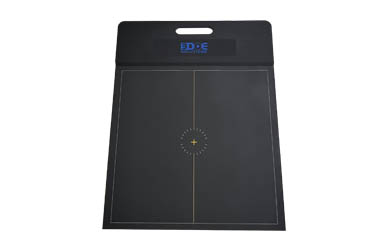
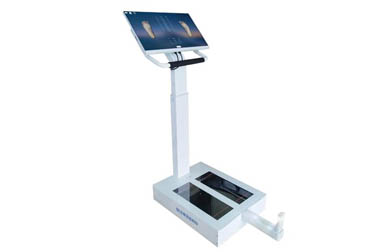
The plantar pressure testing system adopts the principle of pressure sensor matrix to collect data on the plantar force bearing condition of the human body, obtain plantar pressure distribution data and generate visualized analysis reports simultaneously.
The plantar pressure testing system is widely applied in fields including gait analysis, sports injury prevention, orthotic insole evaluation, sports science training, diabetic foot screening, balance ability testing and rehabilitation medicine.
Compared with the traditional ink footprint method, the plantar pressure testing system can collect more accurate data, acquire more dynamic plantar force bearing information, and is equipped with real-time pressure heat maps, featuring rich data dimensions and more scientific applications.
1. Working Principle of Plantar Pressure Testing System
Through the high-density pressure sensor array, the system conducts rapid sampling on the contact surface between the sole and the ground. During the test, the sensors capture a large number of pressure value points simultaneously to generate plantar pressure distribution data, which are analyzed and processed by algorithms on the computer software to produce a complete visualized plantar pressure heat map.
The data collectible by the plantar pressure testing system includes peak pressure, pressure-time integral, contact area, contact time, arch index, left and right foot load ratio, gait cycle duration, stance phase duration, swing phase duration, pressure center trajectory, left-right foot difference, stride length and cadence, gait symmetry and other parameters.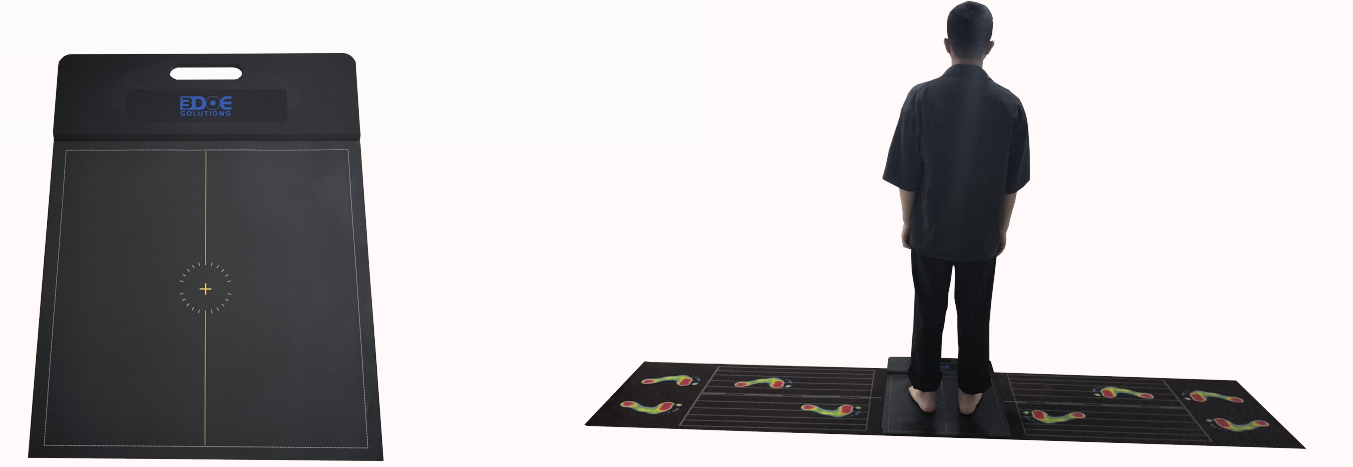
2. Test Process of Plantar Pressure Testing System
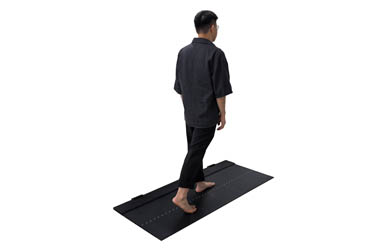
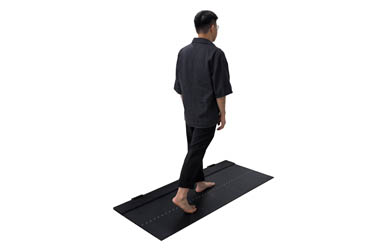
(1) The tester walks or stands barefoot on the designated flat area of the equipment as required. During walking, the tester shall maintain a natural gait, ensure that the feet fully land on the pressure plate, avoid deliberate physical control, and look straight ahead. The entire test process usually collects 3-5 valid gait cycles.
(2) The plantar pressure testing system conducts high-frequency data collection on the sole, including the collection of pressure value changes at different time points.
(3) The software on the computer connected to the test system analyzes and processes the collected data and pressure values, generates plantar pressure cloud maps, divides gait cycles, performs data smoothing and parameter extraction, and finally presents a complete plantar pressure analysis report.
(4) The collected data are analyzed to generate a corresponding evaluation report based on the database. Users can fully understand their own gait conditions through the analysis report, including the existence of foot valgus, foot varus, excessive forefoot force bearing, abnormal heel load and other problems, as well as multiple indicators such as gait staging, balance ability, insole intervention suggestions and key plantar force bearing points.
3. Differences Between Plantar Pressure Testing System and Foot 3D Laser Scanner
These two devices are often confused by people, but there are substantial differences between them.
The plantar pressure testing system mainly measures the "force bearing condition" of the sole, which belongs to functional measurement.
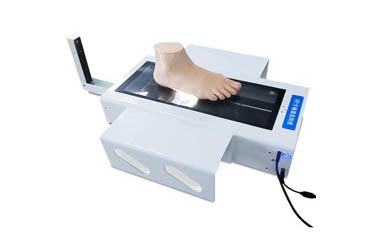
The foot 3D laser scanner mainly measures the morphological structure of the foot.
The plantar pressure testing system focuses on dynamic and static mechanical analysis.
The foot 3D laser scanner focuses on static geometric dimension measurement.
Nevertheless, combined measurement of the two devices is required in many fields. For example, in the customization of functional insoles, plantar pressure testing is used to analyze abnormal force bearing areas to formulate correction schemes, while foot 3D scanning provides accurate edge contour and volume data for insoles, enabling the insoles to fit the foot shape perfectly and effectively optimize the force bearing distribution.
 Back to list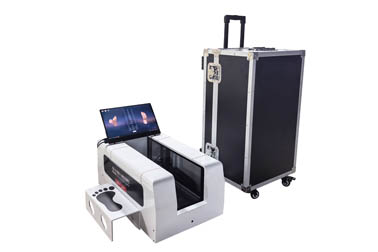


 +86-0755-86131192