
 +86-0755-86131192
 2026-08-25
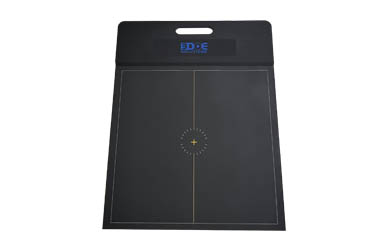
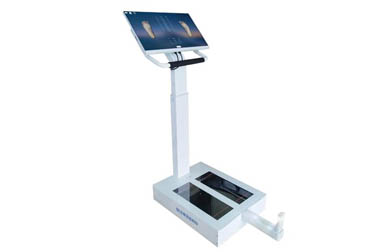
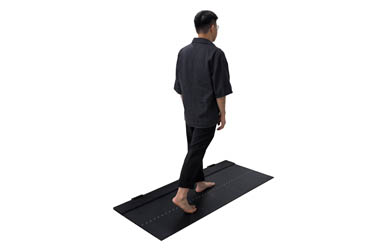
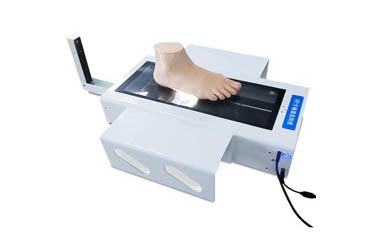
Built-in with high-density and high-sensitivity pressure sensors inside the plate, the plantar pressure distribution system collects real-time pressure distribution of different foot regions and relevant gait data when subjects stand still, walk or run.
The system mainly offers three measurement modes: static measurement, balance measurement and dynamic measurement.
Its main output includes pressure cloud maps, partition mechanical parameters, center-of-pressure sway and time-series gait curves, which deliver objective references for flat foot, foot varus-valgus, abnormal gait, balance disorder and orthotic insole design.
1.Functions of Static Measurement Mode
For static measurement, subject simply stand still on the sensor area of the pressure plate, keep relaxed, look straight ahead and refrain from body sway. The whole measurement takes only 3-5 seconds.
Key data collected under static mode cover total pressure of left and right feet, contact area, peak pressure at high-stress points, foot length and width, pressure ratio between forefoot and hindfoot. It can identify arch types including high arch, normal arch, mild, moderate and severe flat foot. Other outputs contain static foot progression angle, heel contact area, heel angle, as well as pressure, contact area and pressure value of ten plantar zones: medial heel, lateral heel, medial midfoot, lateral midfoot, each metatarsal zone and toe zones.
Static data can be used to assess in-toeing and out-toeing when standing, conduct foot type screening, evaluate foot asymmetry and collect baseline data before orthotic intervention. It also helps judge heel valgus, and classify arch conditions such as high arch, normal arch, mild, moderate and severe flat foot.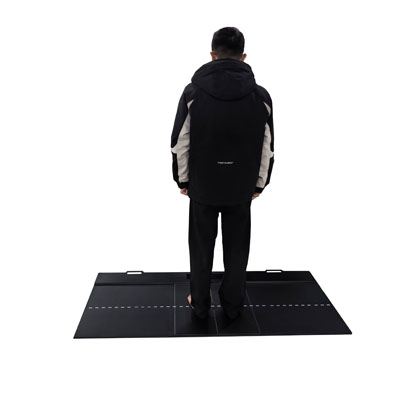
2.Functions of Balance Measurement Mode
For balance measurement, subjects maintain static standing just like in static test. The system records subtle sway data of body center of gravity during standing, and the whole procedure lasts roughly 3-5 seconds.
Balance measurement includes eyes-open test and eyes-closed test. User can select one mode according to practical scenarios or adopt both for combined assessment.
Measured balance parameters consist of COP trajectory length,area of 95% confidence ellipse, maximum anterior-posterior and medial-lateral displacement of center of gravity, average and maximum sway velocity, as well as anterior-posterior and medial-lateral sway curves for left foot and right foot.
These datasets are mainly applied to evaluate human postural control, with core outputs focusing on center-of-pressure (COP) parameters.
It is widely adopted for fall risk screening among elderly people, post-stroke postural control assessment and proprioception function evalution.
3.Functions of Dynamic Measurement Mode
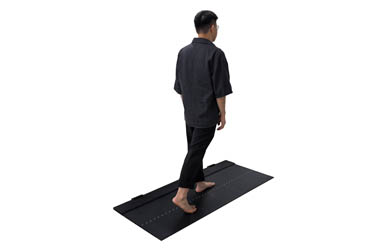
In dynamic measurement, subjects walk back and forth across the pressure plate for 3-5 passes at their usual walking speed and gait. The whole process takes approximately 10-20 seconds.
During walking, both left and right feet need to step fully onto the sensor area of the pressure plate.
The software automatically filters 3-8 valid gait cycles and calculates average values of valid strides as final measurement results.
Gait test outputs include single-stance phase, heel contact duration, midfoot contact duration, metatarsal contact duration, occurrence time of first and second gait force peaks; time varying force curves for whole foot, forefoot, midfoot and hindfoot. It separately provides contact time, contact area, peak pressure, peak pressure timing and maximum regional force for heel, arch, each metatarsal bone and toes. Pressure time integral (PTI) and force time integral (FTI, impulse) are also generated, alongside dynamic foot progression angle and colored pressure cloud maps.
Dynamic data is frequently used for lameness evaluation, post operative rehabilitation assessment of foot and ankle, and comparison before and after orthotic insole intervention.
 Back to list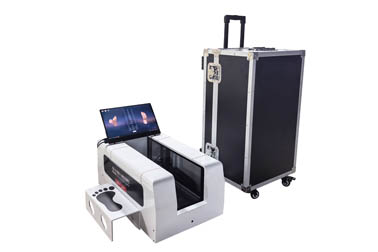


 +86-0755-86131192