
 +86-0755-86131192
 2026-07-14
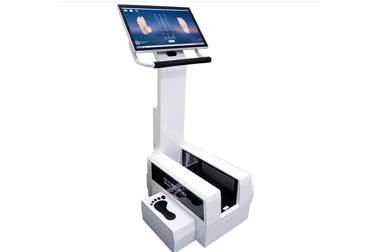
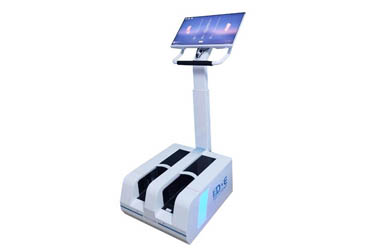
The plantar pressure distribution system is a type of equipment that utilizes the principle of pressure sensors to measure data such as the pressure distribution under the sole, thereby acquiring data related to plantar pressure distribution and relevant gait.
The plantar pressure distribution system is also referred to as gait analysis equipment, and some also call it a plantar pressure plate.
In different application fields, its appellation may vary.
However, the majority of the principles are quite similar.
The plantar pressure distribution system mainly measures pressure data; some models can add cameras to measure gait posture, data from the heel to the calf part, etc.
The data measured by the plantar pressure distribution system mainly includes: full foot pressure, foot progression angle, average pressure, forefoot pressure ratio, arch average pressure, arch peak pressure, arch index, total foot contact area, heel maximum pressure, heel average pressure, heel angle, center of pressure trajectory length, center of pressure velocity, rearfoot pressure ratio, and other data.
The plantar pressure distribution system is commonly applied in medical foot diagnosis, assessment and prevention of diabetic foot, post-operative rehabilitation assessment, orthotic insole fitting, screening and intervention for children's foot deformities, as well as movement optimization and injury prevention in the sports field.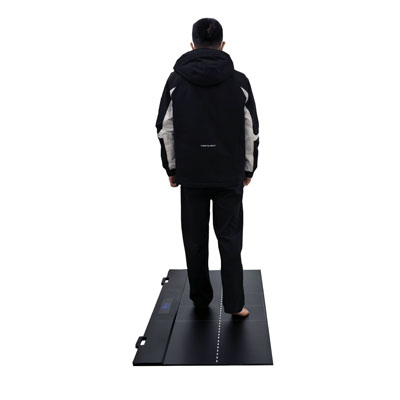
The measurement modes of the plantar pressure distribution system mainly consist of three types: static measurement, dynamic measurement, and balance measurement.
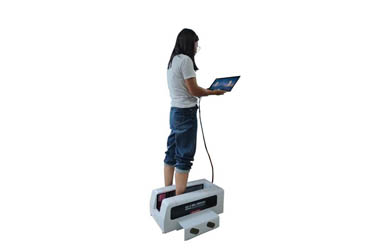
During static measurement, one only needs to stand barefoot on the sensing area of the pressure plate, and then the staff clicks start on the computer; after standing still for about 5-10 seconds, the static measurement can be completed. While standing still, one should keep the body relaxed and natural, keep feet shoulder-width apart, and look straight ahead.
Static measurement is mostly applied in foot diagnosis, as well as the design and production of custom insoles and custom shoes.
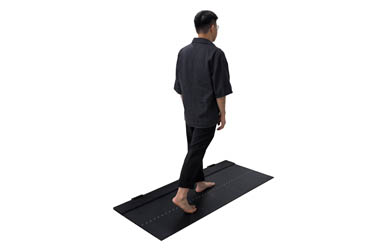
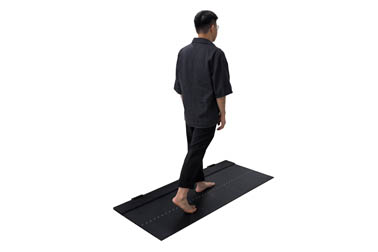
When conducting dynamic measurement, it is required to walk back and forth across the pressure plate for 3-5 times. During the process of walking back and forth, the steps should be natural, eyes looking straight ahead, and it is best to walk in a barefoot state, with steps as relaxed and natural as usual walking.
Dynamic measurement is mostly applied in foot rehabilitation diagnosis and pre- and post-operative assessment.
During balance measurement, one can choose to stand still, or choose to close eyes while standing; this needs to be based on the specific usage scenario to select the appropriate measurement method. The purpose of balance measurement is to detect the trajectory of human center of pressure movement and assess human balance ability.
Balance measurement is generally applied in fall prevention assessment for the elderly, etc.
These several measurement modes, the whole process is done in a few dozen seconds, while generating corresponding measurement reports.
The measurement report displays data in the form of charts and evaluates foot health, such as judging whether flat foot, high arch, etc. exist.
In addition, corresponding measurement reports can also be customized according to specific application scenarios, making it clear for customers to understand the data and be able to apply it to actual life.
 Back to list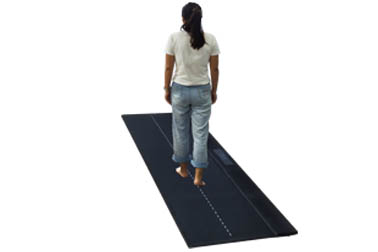


 +86-0755-86131192