
 +86-0755-86131192
 2026-07-15
Flat feet, a very common foot deformity, belongs to the category of collapsed arches.
Flat feet generally refer to the collapse of the medial longitudinal arch of the foot, and in severe cases, it will lead to the disappearance of the arch.
Flat feet include mild flat feet, moderate flat feet, and severe flat feet; mild flat feet can generally be alleviated and corrected through orthotic insoles and corrective shoes, while moderate and severe flat feet may also require targeted rehabilitation training and relevant aids, or even surgery, to be corrected.
There are generally two types of causes for flat feet: congenital and acquired.
Congenital causes include heredity and deformity of foot bone development during the growth process.
Acquired causes generally refer to excessive body weight, where the foot bears overloaded weight for a long time leading to arch deformation, including those caused by poor shoe-wearing or poor exercise habits, and also include those indirectly triggered by other diseases, such as diabetic neuropathy.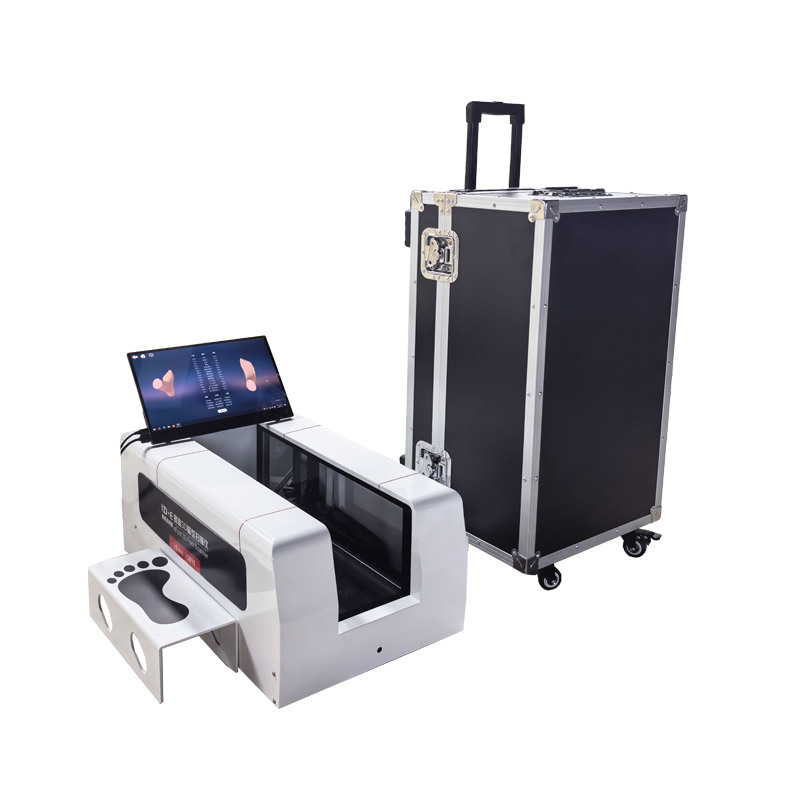
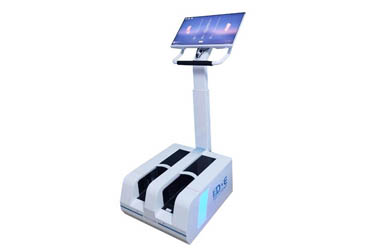
The foot 3D scanner mainly uses the principle of lasers to collect foot shape data, acquire foot 3D data, and generate corresponding measurement reports.
Foot 3D scanning belongs to non-contact measurement, which will not cause physical injury, and the measured data is more objective and accurate, avoiding large errors or even mistakes caused by manual measurement.
During measurement, one only needs to stand in the scanning area, keep the body relaxed and natural, and measure according to voice prompts; the entire measurement process takes only about 20 seconds to complete the measurement of both feet and obtain a graphical measurement report and 3D data in formats such as STL.
Among them, the method for judging whether it is flat feet is as follows:
Judgment is made through the Arch Index, or AI.
AI = Midfoot contact area ÷ Total plantar area of the whole foot.
When AI < 0.21, it is judged as high arches.
When the AI value is between 0.21 and 0.26, it is judged as normal feet.
When the AI value is between 0.26 and 0.30, it is judged as mild flexible flat feet.
When the AI value > 0.3, it is judged as moderate to severe flat feet; this situation is likely rigid flat feet.
Compared with traditional judgment methods like visual inspection, the foot scanner has precise data, making the judgment more scientific, more accurate, and more convincing.
In addition, the measured 3D data such as STL can also be applied to the design and production of corrective insoles, and can also be used for applications such as intelligent shoe size selection.
 Back to list


 +86-0755-86131192