
 +86-0755-86131192
 2026-07-22
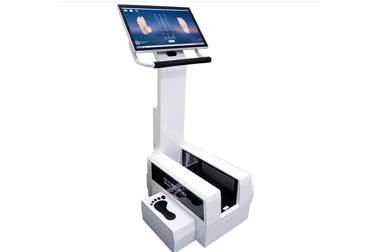
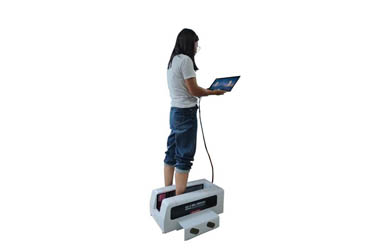
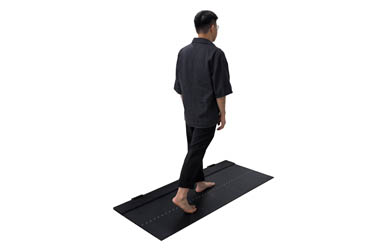
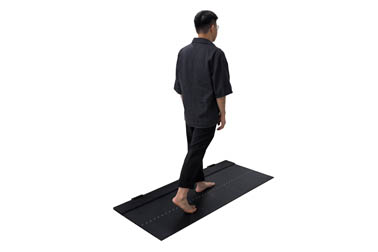
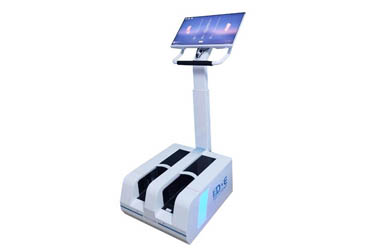
The core working principle of the plantar pressure testing instrument is to measure data such as plantar pressure distribution under states like static standing or walking.
Inside the plantar pressure plate, thousands, tens of thousands, or even tens of thousands of high-sensitivity pressure sensors are built-in, and this type of sensor belongs to resistive sensing.
When there is no pressure, the distance between the conductive particles inside these pressure sensors is large, the resistance is high, and almost no current passes through.
When a person stands statically or walks through, the pressure sensor is subjected to force, the gap between the internal conductive particles becomes smaller, the conducting paths increase, and the overall resistance becomes smaller; the greater the pressure, the smaller the overall resistance becomes.
The circuit module collects the resistance value of every sensor point in real-time, and through the corresponding calculation mechanism, converts the resistance value into specific pressure values (KPa), and displays them on the software in forms such as plantar pressure maps.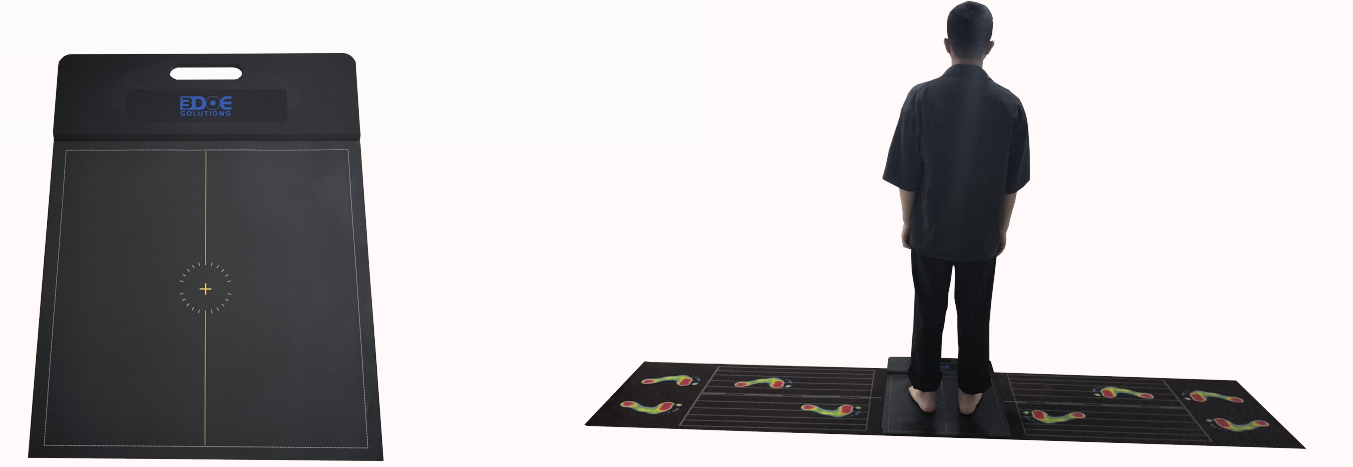
Of course, in addition to collecting and sensing through resistive sensors, some brands also use capacitive sensors for collection and sensing.
The data measured by the plantar pressure testing instrument generally includes peak pressure, average pressure, weight-bearing distribution (proportion of force between left and right feet), landing sequence, impulse, plantar Center of Pressure trajectory (COP trajectory), contact time, gait cycle, and other data for various zones of the sole (heel, arch, forefoot, toes).
After the measurement is completed, it is generally displayed through a chart-based measurement report, and there are also data parameter documents in formats such as CSV.
The most common major applications of the plantar pressure measurement instrument are:
1. Applied in the screening and diagnosis of foot deformities.
For example, detecting whether there are flat feet, high arches, heel varus/valgus, hallux valgus, leg length discrepancy, O-legs, X-legs, knee valgus, etc.
2. Conducting preoperative and postoperative diagnosis and evaluation for rehabilitation.
Before the operation, measuring data such as plantar pressure provides reliable data for the surgical plan, making the medical scheme more reasonable and efficient.
After the operation, by measuring data regularly, one can judge and evaluate the postoperative recovery status or guide the corresponding rehabilitation training.
3. Applied in rehabilitation intervention for stroke, hemiplegia patients, and children with cerebral palsy.
Through the data, reasonable rehabilitation exercises or customized orthotics and orthopedic insoles are given to these groups to promote rehabilitation effects.
4. Applied in fall prevention assessment for the elderly.
By measuring the balance data and dynamic walking center of gravity movement trajectory of the elderly, one can predict the fall risk of the elderly and conduct reasonable gait and balance training based on the data to achieve the goal of preventing falls.
5. Applied in the design and production of corrective insoles and corrective shoes.
In podiatry stores, rehabilitation centers, etc., when foot problems such as flat feet, high arches, foot varus, foot valgus, and leg length discrepancy are detected, corresponding corrective insoles, corrective shoes, and related corrective aids can be designed based on these data of pressure distribution to help the patient's feet return to a normal state.
 Back to list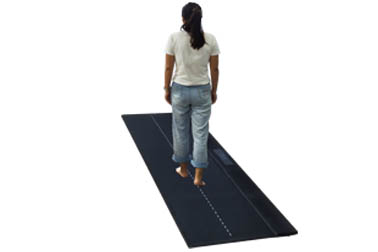


 +86-0755-86131192