
 +86-0755-86131192
 2026-08-31
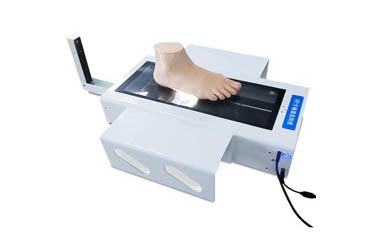
Plantar pressure‑testing devices are core tools for assessing the functional status of the foot.
Abnormal plantar pressure distribution will directly lead to biomechanical imbalance, resulting in hidden risks such as uneven foot loading and aggravated joint wear during walking or sports.
Common plantar pressure‑testing devices mainly include:
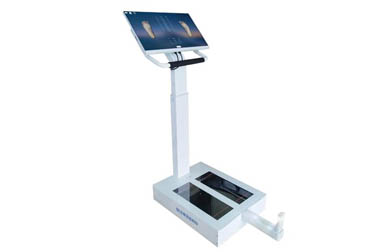
Platform‑type pressure testing system.
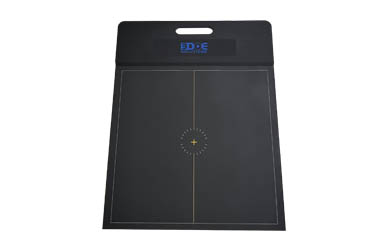
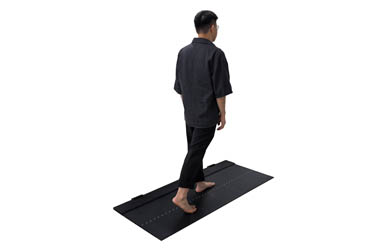
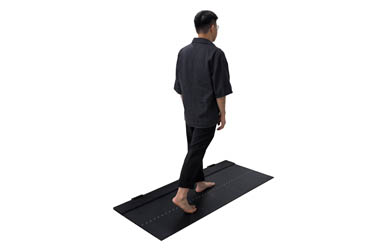
This device is very intuitive. A pressure‑sensing plate is embedded in the ground. The subject stands naturally or walks across it. The plantar loading condition is analysed by capturing instantaneous pressure heatmaps.
For a normal foot, the centre‑of‑pressure line usually runs through the heel, the lateral mid‑foot and then to the forefoot.
If a large high‑pressure red area appears in the medial arch region on the pressure heatmap and the centre‑of‑pressure line shifts obviously inward, it is identified as the plantar‑pressure characteristic of flat feet.
If hardly any pressure is shown in the arch region on the pressure heatmap, and pressure is concentrated mainly on the heel and forefoot with a disconnected gap in‑between, it is identified as the plantar‑pressure characteristic of high arches.
Portable in‑shoe testing system.
Some mobile testing devices adopt sensor‑embedded insoles placed inside shoes to judge changes in plantar pressure during walking based on dynamic data.
Pressure values under two conditions, namely static standing and dynamic walking, are observed separately.
In the standing state, the pressure distribution of each plantar region is observed. If the medial pressure is significantly higher than the lateral pressure, the foot presents excessive pronation, which usually corresponds to flat feet.
In the dynamic walking state, for example, during the push‑off phase of stepping, a normal transition of foot loading indicates normal shock‑absorbing function of the foot arch; abnormal or delayed load transition indicates functional abnormality of the foot.
During walking, the trajectory of the plantar centre of pressure is observed. Excessively large swing amplitude of the trajectory plus extremely high lateral plantar pressure is judged to be insufficient shock absorption caused by high arches.
Naturally, there are other static observation methods. However, these approaches basically lack support from dynamic data. Judgement relies merely on static morphology, which is prone to functional misjudgement. Besides, it is difficult to accurately distinguish whether plantar load is biased medially, biased laterally or unevenly distributed, so the assessment results are one‑sided.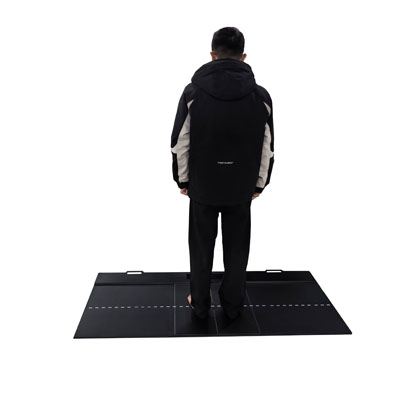
With the popularisation of plantar pressure‑testing devices, flat feet and high arches can be evaluated more accurately through quantified numerical indicators.
Based on high‑sensitivity sensors, plantar pressure‑testing devices collect data such as plantar pressure, and finally generate heatmap‑formatted data and assessment reports in formats including PDF.
Assessment reports are usually presented in a data‑driven manner, allowing comprehensive understanding of plantar loading and balance conditions, including identification of foot conditions such as flat feet and high arches.
Plantar pressure‑testing devices mainly carry out objective judgement by calculating the Arch Index (AI).
Arch Index = Mid‑foot contact area ÷ Total foot contact area excluding the toes
When the AI value is less than 0.21, the foot is judged as a high‑arch foot (with a very small mid‑foot contact area).
When the AI value ranges from 0.21 to 0.26, the foot arch is normal.
When the AI value ranges from 0.26 to 0.28, the foot is classified as mild flat‑foot.
When the AI value ranges from 0.28 to 0.30, the foot is classified as moderate flat‑foot.
When the AI value is greater than 0.30, the foot is classified as severe flat‑foot (the arch almost fully touches the ground with a large mid‑foot contact area).
Plantar pressure‑testing devices can provide objective functional judgement for flat feet and high arches and deliver more scientific assessment outcomes. Moreover, data acquisition takes a very short time; measurements can usually be completed after several walking steps or an instant standing posture, featuring high efficiency and reliable accuracy.
 Back to list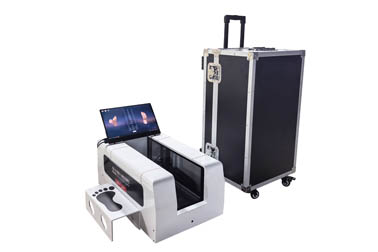


 +86-0755-86131192