
 +86-0755-86131192
 2026-08-07
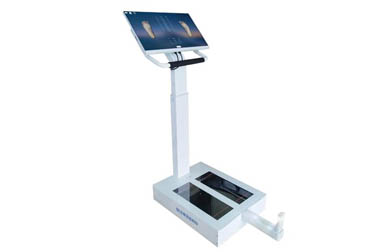
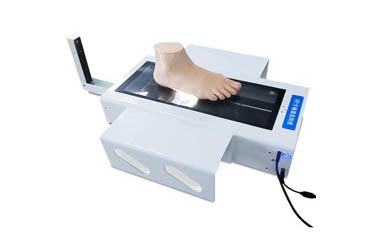
3D Foot Laser Scanner, also known as the 3D Children’s Foot Morphology Detection System, and some people call it a foot scanner.
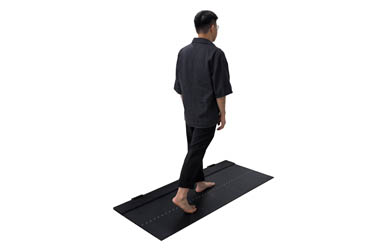
There are a wide range of models: portable types, such as desktop portable models, suitable for rapid screening at home and in campuses; there are also vertical professional models, such as integrated units equipped with handrails and computers, applicable to hospitals, rehabilitation institutions and other venues.
Most current 3D foot laser scanning systems adopt static measurement mode.
The 3D foot laser scanning equipment mainly collects the overall three-dimensional outline of the foot, three-dimensional morphology of the foot arch, calcaneal angle, length-width ratio of the foot, morphology of the forefoot and hindfoot and other three-dimensional foot parameters when a person stands still in a weight-bearing posture.
The collected data will be displayed on the software in the form of 3D stereoscopic models and graphical parameters, allowing users to clearly view various three-dimensional foot data and evaluation results. The data can be downloaded in formats including STL, OBJ and PDF. The measurement report contains dozens of key three-dimensional parameters, which can be widely applied in fields such as children’s foot development screening, foot deformity correction, customized orthosis fabrication, children’s posture assessment, and adolescent foot health management.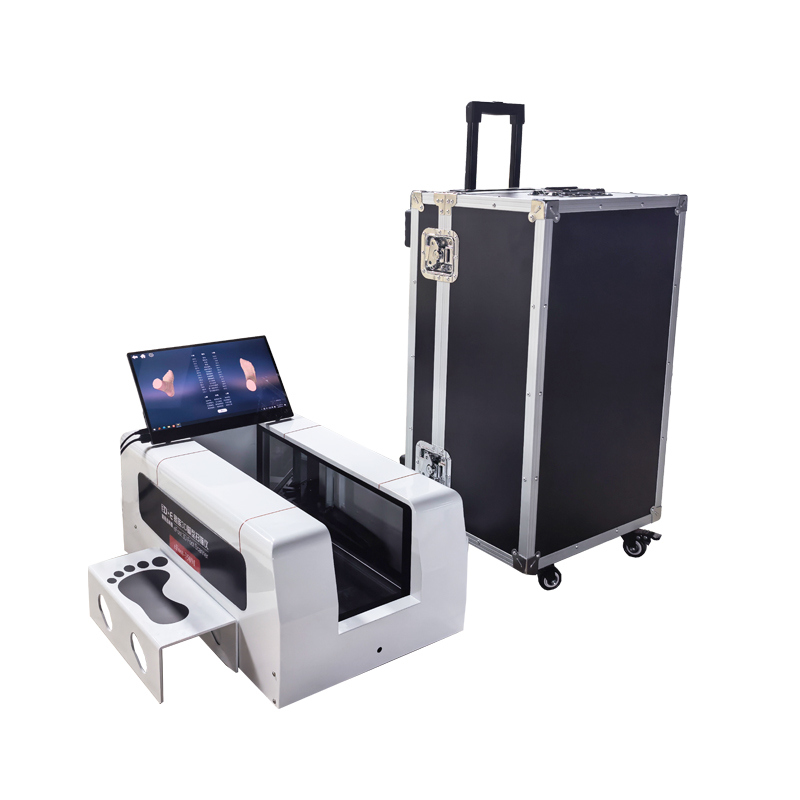
Now we will focus on elaborating the applications of 3D foot laser scanning equipment in children’s developmental assessment:
1. Accurately assess foot deformities including flatfoot, high arch foot, varus foot, valgus foot and hallux valgus.
Before children reach the age of 5 to 12, the bones, ligaments and soft tissues of the feet are in a continuous developmental and shaping stage. Through precise detection by the 3D foot laser scanner, core three-dimensional data such as foot arch height, three-dimensional radian of the foot arch and calcaneal tilt angle can be quantitatively collected, so as to timely detect abnormal morphological development of children’s feet during growth and enable timely intervention and correction.
If such foot deformities are only discovered in adulthood, the foot bones will have fully matured, making correction far more difficult, and thorough improvement can hardly be achieved through conservative intervention.
2. Assist in evaluating problems such as delayed development of children’s ankles and feet, and compensatory abnormal posture development.
The evaluation relies on complete three-dimensional modeling data of the feet, namely the symmetry of bilateral foot morphology, matching degree of foot arch development, and three-dimensional structural data of feet and ankles.
If these three-dimensional data show obvious deviations from standard developmental data of children of the same age and remarkable abnormalities in structural morphology, it highly indicates that children suffer from delayed foot and ankle development or posture compensation. Doctors can carry out comprehensive diagnosis and developmental prediction combining these accurate three-dimensional data and clinical signs.
3. Evaluate the existence of bilateral foot asymmetry, lower limb force line deviation, abnormal biomechanical structure of feet and ankles, and compensatory walking posture problems.
For example, by measuring differences in three-dimensional dimensions of bilateral feet, calcaneal alignment angles and three-dimensional structures of foot arches, targeted evaluation can be conducted on developmental issues including bilateral foot asymmetry, lower limb force line deviation, unilateral foot and ankle structural abnormalities, and compensatory walking posture.
4. Support precise design and customization of personalized orthotic insoles, foot and ankle braces, and corrective shoes.
For foot developmental problems such as flatfoot, high arch foot, varus foot, valgus foot and bilateral foot asymmetry, the most commonly adopted conservative correction method is auxiliary intervention with personalized orthotic insoles and foot and ankle orthoses.
With the collection of high-precision three-dimensional foot data, rehabilitation therapists and orthotists can accurately analyze the three-dimensional structure of the foot, deformity positions and developmental defects, and formulate targeted personalized correction plans.
When manufacturing orthotic insoles, orthotic assistive devices and corrective shoes, designers conduct precise design and mold opening in strict accordance with the 3D scanning models and correction plans.
Some professional assistive device design software can directly import three-dimensional foot scanning data, and intelligently adjust the supporting points, fitting radian and shaping angles of assistive devices according to the three-dimensional foot structure. As a result, the customized orthotic products deliver better adaptability, and the correction effect is more consistent with children’s developmental needs.
5. Conduct assessment of long-term developmental risks of children’s feet and dynamic monitoring.
Through multiple phased scanning tests using the 3D foot laser scanner, continuous tracking can be realized on developmental changes of children’s foot arches and foot and ankle structures. Potential risks such as aggravated abnormal foot development and posture compensation can be detected early, and scientific intervention can be carried out in advance to avoid foot and ankle developmental defects and posture deformities emerging during children’s growth.
The 3D foot laser scanning system is non-invasive, radiation-free and realizes non-contact measurement. In addition, the scanning speed is fast, and measurement can be completed within 10 to 20 seconds. The whole process is painless and imperceptible, so children can easily accept the test. It is suitable for repeated re-examination and monitoring of children of different age groups. Furthermore, the visualized 3D models and intuitive data make it easy to clearly explain the developmental status and abnormal conditions of children’s feet to parents.
Naturally, when performing 3D foot scanning measurement for children, standardized operation shall be conducted under the guidance of professionals. The data detected by the equipment can only serve as reference. The final judgment, diagnosis and correction plan shall be subject to the comprehensive evaluation results of professional doctors.
 Back to list


 +86-0755-86131192