
 +86-0755-86131192
 2026-08-11
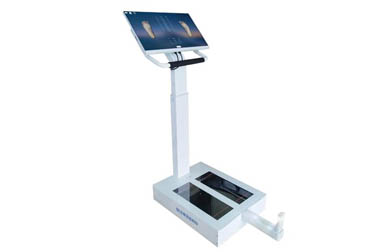
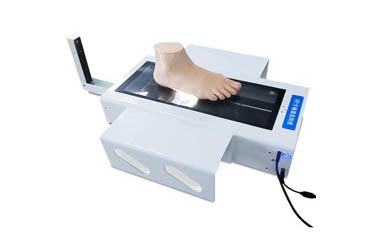
A 3D laser scanner, also known as a non-contact foot morphology measuring instrument.
The primary function of this device is to scan the three-dimensional outline and relevant morphological data of the human foot in a static standing posture in real time via multi-line laser sensors.
The 3D laser scanner can measure the following data: total foot length, total foot width, instep height, foot circumference, plantar area, heel width, forefoot width, arch height index, toe angle, medial-lateral malleolar spacing, bilateral foot length difference, bilateral foot circumference difference, foot volume and so on.
What purposes do these measured data serve?
1. Identify potential abnormalities in foot morphology.
Based on three-dimensional foot morphological data, assessments can be carried out to check for flat feet and high arches.
Flat feet feature significantly lower arch height readings compared with normal feet, and demonstrate a collapsed arch shape on the three-dimensional model.
High arches have arch height values markedly higher than the normal range, and may even present an arch bridge-like contour.
Experienced physicians can visually detect severe flat feet and high arches, yet visual observation lacks objective dimensional measurements.
In contrast, the measurement results obtained by the 3D laser scanning system are objective quantitative data with high precision, enabling more accurate evaluation and better differentiation between structural flat feet and flexible flat feet.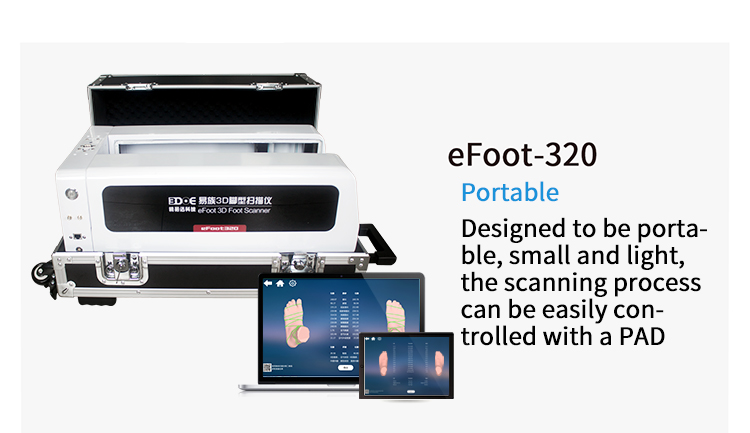
2. Facilitate investigation into causes of ill-fitting custom footwear, and the equipment is most widely adopted by professional orthopaedic shoe customization institutions and high-end shoe stores.
Issues such as shoe rubbing and foot squeezing do not always stem from the footwear itself; they are very likely triggered by mismatches between unique foot shapes and standard shoe lasts.
For instance, people with high insteps will press the instep against the shoe upper while wearing shoes, which hinders local blood circulation and eventually causes swelling and redness on the instep.
Simply choosing shoes one size larger cannot resolve fitting issues. Comfort can only be achieved by matching footwear to the exact foot circumference.
Only by identifying morphological discrepancies can foot discomfort caused by footwear be fundamentally addressed.
3. Assist the design and fabrication of orthotic insoles and custom-made footwear.
Many patients with mild to moderate flat feet, high arches, heel varus, heel valgus, hallux valgus and other conditions opt for correction by wearing custom orthotic insoles.
Manufacturing such orthotic products requires three-dimensional foot contour data to design customized fitting curved surfaces for insoles and internal space for footwear.
When designing orthotic insoles for flat feet, for example, medial arch support needs to be added to fill the arch gap, and the support height must be quantified according to specific contour data.
Accurate foot morphological data ensures the designed products achieve satisfactory fitting performance while meeting personalized requirements.
4. Establish digital foot archives for special populations.
Three-dimensional foot morphology data and relevant dimensional measurements support digital archiving and screening for patients with diabetic foot, flat feet, heel varus/valgus, X/O-type legs, stroke, cerebral palsy and spinal cord injuries.
In addition, the measured data can be applied to guide the design of rehabilitation assistive devices and the selection of orthopaedic footwear.
 Back to list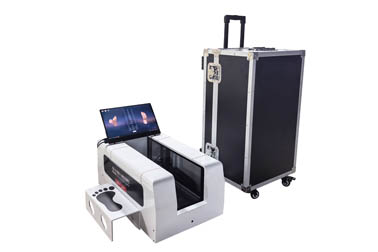


 +86-0755-86131192