
 +86-0755-86131192
 2026-08-12
Significance and Functions of Measurement Plantar Pressure with Gait Analyzers
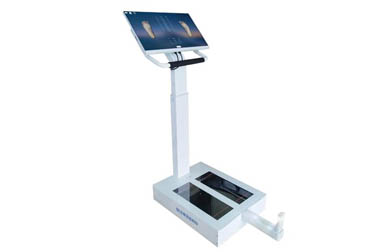
A gait analyzer is also known as a plantar pressure gait analyzer.
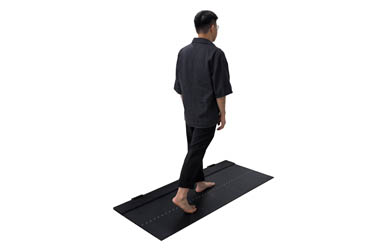
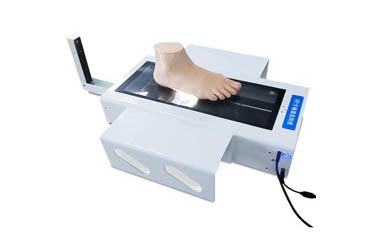
The core function of this device is to collect real-time plantar pressure distribution of each foot area and relevant gait data under static standing, walking and other states via high-sensitivity sensors.
A gait analyzer can measure the following parameters: peak plantar pressure, average pressure, foot contact sequence, foot contact duration,cadence, step width, step length, center-of-pressure trajectory (COP curve), load distribution among forefoot, midfoot and hindfoot, medial-lateral load ratio, arch load difference between medical and lateral heel, and so on.
What are the functions of measuring these parameters?
1.Identify potential foot disorders.
Plantar pressure data can be used to assess flat feet and high-arched feet.
The midfoot pressure of flat feet is obviously higher than that of normalfeet, accompanied by inward shift of the center of gravity during walking.
The midfoot pressure of flat feet is obviously higher than that of normal feet, accompanied by inward shift of the center of gravity during walking.
The midfoot pressure of high-arched feet is remarkably lower than the normal value, and the midfoot may bear almost no load.
Experienced physicians can identify severe flat feet and high-arched feet through visual observation, yet without objective quantitative data.
In contrast, the plantar pressure testing system delivers objective quantitative and precise measurement results, enabling more accurate assessment. It helps effectively distinguish flexible flat feet and rigid flat feet.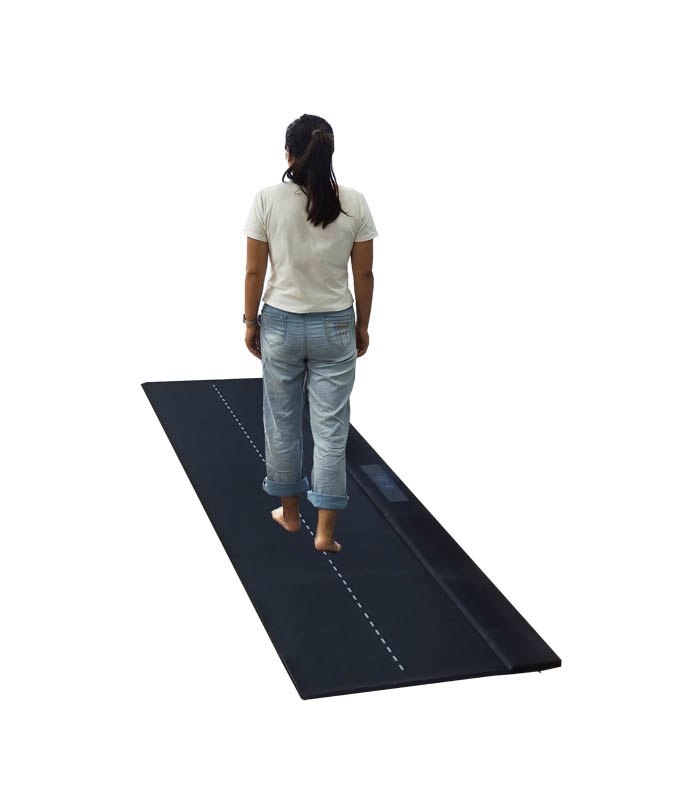
2.Facilitate tracing the root cause of lower limb pain, widely adopted in rehabilitation and orthopedics departments of hospitals.
The source of certain lower limb pain may not be located at the painful spot. It is likely triggered by abnormal plantar pressure transmitting upward along the kinetic chain.
For example, excessive overpronation during walking will cause knee valgus and increase stress on the patellofemoral joint, eventually leading to knee pain and other symptoms.
Treating knee pain alone cannot solve the problem fundamentally. Only by correcting abnormal plantar load simultaneously can through relief be achieved.
Locating the root cause of pain is the key to complete recovery.
3.Assist the design and fabrication of orthotic insoles.
Many patients with mild to moderate flat feet, high-arched feet, heel varus, heel valgus, leg-length discrepancy and other conditions choose customized orthotic insoles for correction.
Fabrication of such orthotic insoles requires plantar pressures distribution data to targetedly set supporting positions and cushioning zones.
For instance, designing orthotic insoles for flat feet requires extra medial arch support to disperse midfoot pressure. Design criteria should be quantified based on specific pressure data.
Accurate plantar pressure data ensures the manufactured insoles deliver satisfactory corrective effects and meet personalized demands.
4.Screening for special populations.
Plantar pressure distribution data and related gait parameters support assessment and screening for patients with diabetic foot, flat feet, foot varus/valgus, X-type/O-type legs, stroke, cerebral palsy and spinal cord injury.
Furthermore, measurement data can also guide rehabilitation training and the selection of orthotic braces.
 Back to list


 +86-0755-86131192