
 +86-0755-86131192
 2026-05-12
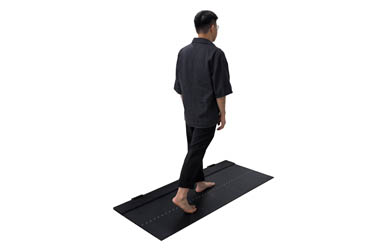
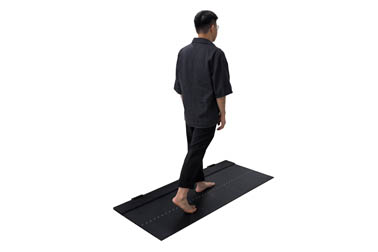
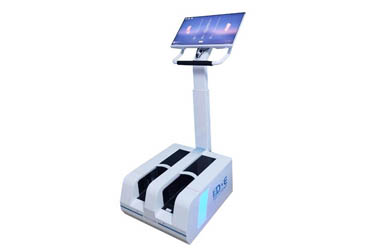
The foot laser 3D scanner adopts laser principles to scan and measure the human foot, acquiring 3D foot data and measurement reports.
Foot scanners are widely applied in rehabilitation medicine, foot screening, elderly fall prevention, pre-operative and post-operative foot rehabilitation, sports performance improvement, as well as the orthotic design of insoles and shoes.
They are also applicable to physical shoe retail stores, assisting customers with intelligent shoe size selection, recommending shoes and insoles that fit foot dimensions, and supporting the customization of orthotic insoles and orthopedic shoes.
I. Principles of the Foot Laser 3D Scanner
1. Laser projection: The built-in laser emitter of the foot scanner projects one or multiple laser lines toward the foot for scanning.
2. Optical capture: The built-in cameras or relevant optical sensors of the foot scanner capture the morphological changes of laser lines projected onto the foot.
3. Sensors record deformation data of the projected laser. When the emitted laser hits any part of the foot, it bends and deforms; sensors calculate the spatial position of foot points based on laser offset and other related information.
4. Calculate the 3D coordinates of each point: Based on the angles and distances formed by the laser emitter, cameras (or other optical sensors) and the foot, the spatial 3D coordinates of each point are computed.
5. Point cloud generation: A large number of spatial points are captured during laser scanning, which form point cloud data. Such point cloud data can accurately describe the surface curves, radian and structural features of the human foot.
6. Mesh reconstruction: The generated point cloud is processed by computer software to form a 3D mesh model, presenting a complete digital foot contour, namely the foot 3D model.
II. Advantages of Adopting Laser Principles for Foot Laser Scanners
1. Non-contact measurement avoids physical discomfort and foot compression, enabling higher accuracy of acquired foot data and eliminating major errors.
2. Fast scanning speed. A complete measurement generally takes only about 10 to 20 seconds, saving time and improving efficiency.
3. High precision. For instance, the precision of 3DOE foot 3D scanner can reach below 0.5mm.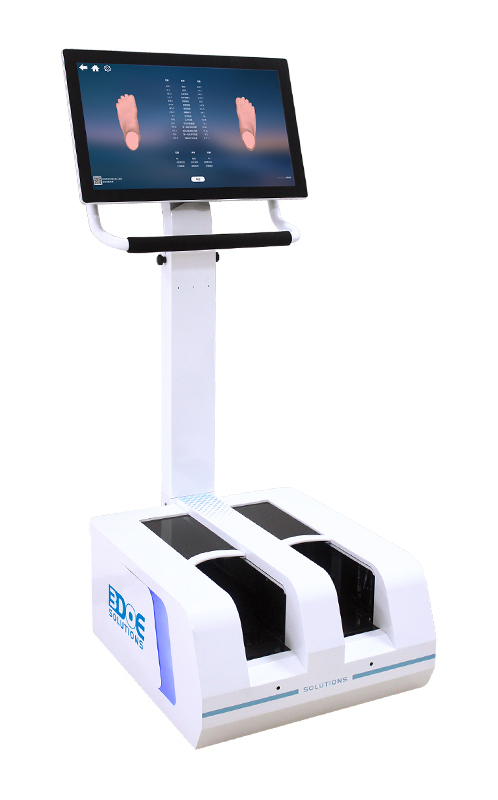
III. Operation Process of the Foot Laser 3D Scanner
1. Power on the device before use, and confirm whether the scanner operates normally and has no major errors.
At the start of each day before bulk scanning, staff shall inspect the equipment and verify several sets of measured data to check for abnormal data.
If abnormal data is detected, technical personnel shall be arranged for timely maintenance, such as recalibration and adjustment of light brightness.
2. Pre-measurement preparation.
Take off shoes and socks to keep the foot bare before measurement, and clean the foot to maintain a clean and dry state, so as to ensure clear laser reflection.
3. Notes during measurement.
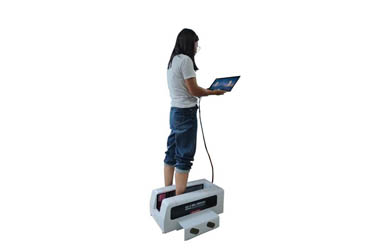
Stand within the scanning area during measurement, keep the body relaxed and natural without shaking, look straight ahead, and follow the voice guidance of the software for operation.
After measurement, hold the handrail, check the surrounding environment, and step down safely to avoid tripping or colliding with the rear camera.
4. Properly store the measured data. If private information is involved, such as the input phone number, you may ask technical staff to delete local measurement reports and other data on the spot to prevent information misuse.
 Back to list


 +86-0755-86131192